
If you’re selling CO2 cylinders across borders — whether via Amazon FBA, your own Shopify store, or B2B wholesale channels — logistics is where profit margins are won or lost. A 425g aluminum CO2 cylinder costs roughly $3-5 to manufacture, but getting it from a factory in China to a customer’s doorstep in the United States or Europe can easily add $4-8 in logistics costs. Get your logistics strategy wrong, and you could be losing money on every sale without realizing it.
This guide breaks down the three primary logistics models for CO2 cylinder cross-border e-commerce: Amazon FBA, third-party overseas warehouses, and direct merchant fulfillment (FBM). For each model, we’ll calculate realistic cost estimates, explain the operational trade-offs, and help you choose the right mix for your business stage.
The CO2 Cylinder Logistics Challenge
Before we dive into models, let’s understand why CO2 cylinder logistics is uniquely complex:
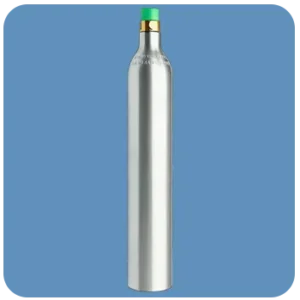
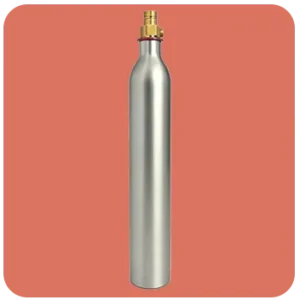
- Weight Penalty: A 425g aluminum CO2 cylinder weighs approximately 640g empty. Including packaging, each unit is 800-900g. Logistics costs scale directly with weight, making air freight prohibitively expensive for volume shipments.
- Dangerous Goods Classification: CO2 cylinders fall under UN1013 (Carbon Dioxide) in the dangerous goods regulations. This means DG surcharges, specialized handling, and restricted shipping options.
- Dimensional Weight: Cylinder packaging is compact but dense. DIM weight calculations can significantly increase shipping costs if packaging is not optimized for carrier dimensional weight formulas.
- Return Complexity: Returns of pressurized gas products have additional restrictions. Many carriers will not accept returns of cylinders that have been filled, creating unique reverse logistics challenges.
Model 1: Amazon FBA (Fulfillment by Amazon)
Cost Breakdown (per 425g CO2 Cylinder — US Market)
- First-mile (factory to port): $0.15 — Trucking from factory to Shanghai/Ningbo port
- Ocean freight (LCL): $0.40 — Per unit for 5,000-unit shipment, Shanghai → LA/Long Beach
- US customs & duty: $0.25 — HS 7311.00 duty rate ~2.6% + customs broker fee amortized
- Drayage + trucking to FBA: $0.35 — Port → Amazon fulfillment center (e.g., ONT8, LGB8)
- FBA fulfillment fee: $5.47 — Amazon standard-size 1-2 lb tier (as of 2025)
- FBA monthly storage: $0.08 — Jan-Sep rate, assuming 30-day average inventory dwell
- Total logistics cost (per unit): ~$6.70
FBA Pros
- Prime badge → higher conversion rate (studies show 30-50% conversion lift)
- Amazon handles customer service and returns
- Multi-channel fulfillment available (fulfill Shopify/Walmart orders from FBA inventory)
- Buy Box advantage over FBM sellers
FBA Cons
- DG surcharges add complexity — CO2 cylinders require dangerous goods classification
- IPI (Inventory Performance Index) score management — low IPI = storage limits and overage fees
- Long-term storage fees after 180 days — slow-moving SKUs will erode margins
- Commingled inventory risk — if you allow commingling, your authentic cylinders may be fulfilled from another seller’s stock
- Return processing — FBA returns are automatically accepted, and damaged returns are your loss
Best For:
Established Amazon sellers with consistent sales velocity, sufficient margin to absorb FBA fees, and a strong IPI score. Ideal when your CO2 cylinder SKU sells 100+ units/month.
Model 2: Third-Party Overseas Warehouse (3PL)
Cost Breakdown (per 425g CO2 Cylinder — US East Coast)
- First-mile: $0.15
- Ocean freight (FCL – full container): $0.20 — Lower per-unit cost at 12,000+ units per 40HQ container
- US customs & duty: $0.25
- Drayage + trucking to 3PL: $0.30
- 3PL receiving fee: $0.15 per-unit inbound processing
- 3PL monthly storage fee: $0.05 per unit
- 3PL pick & pack fee: $2.50 per-order fulfillment
- Last-mile shipping (USPS/UPS): $4.50 — USPS Priority Mail 1-2 lb package, Zone 5 average
- Total logistics cost (per unit): ~$8.10
3PL Pros
- Multi-channel fulfillment — one inventory pool serves Amazon FBM, Shopify, Walmart, eBay, and B2B wholesale
- Lower long-term storage costs than FBA (typically $15-25/pallet/month vs FBA’s $0.87/cubic foot)
- No IPI score management or FBA storage restrictions
- Custom packaging and inserts possible — add branded thank-you cards, catalogs, or cross-sell flyers
- Return processing can be customized — inspect returns, relabel, and restock rather than automatic disposal
3PL Cons
- No Prime badge — conversion rate will be lower on Amazon
- You handle customer service and returns directly
- Higher last-mile shipping cost than Amazon’s negotiated carrier rates
- Requires integration setup between 3PL WMS and your e-commerce platforms
- Quality varies dramatically between 3PL providers — wrong choice = damaged products and delayed shipments
Best For:
Brands selling on multiple channels (Shopify + Amazon FBM + Walmart), DTC brands that need branded unboxing experiences, and B2B wholesalers who need to fulfill both e-commerce orders and bulk pallet shipments from the same warehouse.
Model 3: Direct Merchant Fulfillment (FBM / Dropshipping)
Cost Breakdown
- International express (DHL/FedEx): $9.50 — 1kg package, China → US residential, DG surcharge included
- Packaging materials: $0.40 — Corrugated box + protective insert + shipping label
- Total FBM logistics cost (per unit): ~$9.90
Alternative: China Post / ePacket (1-3 week delivery): ~$6.20 per unit
FBM Pros
- Zero inventory holding cost — no upfront bulk shipment investment
- No warehousing fees — fulfill on demand
- Lower financial risk — no capital tied up in overseas inventory
- Flexibility to test new products without bulk commitment
FBM Cons
- Highest per-unit logistics cost of all models
- Slow delivery times damage conversion rate (customers expect 2-5 day delivery in 2025)
- DG restrictions on air freight limit courier options
- Returns are logistically painful — international return shipping often costs more than the product value
- Customs delays can turn a 5-day delivery promise into a 3-week customer service nightmare
Best For:
Testing new markets and SKUs before committing to bulk inventory. Low-volume B2B sample orders where per-unit cost is secondary to speed. NOT recommended as a long-term fulfillment strategy for CO2 cylinders.
Hybrid Strategy: The Optimal Approach for Growing CO2 Cylinder Brands
Most successful CO2 cylinder sellers don’t use a single logistics model — they use a hybrid approach that evolves with their business:
Phase 1: Market Testing (Months 1-3)
- Model: Direct FBM from China (small batches of 50-100 units via air freight)
- Goal: Validate demand, test pricing, collect initial reviews without bulk inventory risk
- Key Metric: Sales velocity per SKU per week
Phase 2: Scaling (Months 4-9)
- Model: FBA for Amazon + 3PL for other channels
- First Shipment: 2,000 units to FBA (one month of expected demand) + 1,000 units to 3PL for Shopify/B2B
- Replenishment: Ocean freight FCL every 6-8 weeks, timed to avoid stockouts and FBA long-term storage fees
- Goal: Achieve Prime badge on Amazon while building DTC channel on Shopify
Phase 3: Optimization (Months 10+)
- Model: FBA + 3PL + Multi-country warehousing
- US: FBA primary, 3PL in NJ for East Coast B2B fulfillment
- EU: Pan-EU FBA or 3PL in Rotterdam/Warsaw for EU-wide fulfillment with IOSS VAT handling
- Japan: FBA Japan or 3PL in Tokyo/Osaka
- Goal: 2-3 day delivery in all major markets, under 15% total logistics cost as percentage of revenue
Logistics Cost Optimization Checklist
- Optimize packaging weight and dimensions: Every gram saved on packaging reduces shipping cost across the entire fulfillment chain. Switch from double-wall to single-wall corrugated where safe. Right-size your box — excess void space triggers DIM weight penalties.
- Negotiate carrier rates: At 500+ shipments/month, you have leverage to negotiate with UPS/FedEx/DHL. Consider a freight broker or 3PL that aggregates shipping volume for better rates.
- Batch ocean freight: Full container load (FCL) is 40-60% cheaper per unit than less-than-container load (LCL). If you cannot fill a container, partner with complementary product sellers to share a container.
- Monitor FBA IPI score religiously: Keep your IPI above 500 to avoid storage limits. Strategies: improve sell-through rate, remove stranded inventory, fix listing errors that slow velocity.
- Multi-node inventory placement: Use Amazon’s Placement Service or ship strategically to reduce last-mile delivery zones. A cylinder shipped from a NJ warehouse to a NY customer costs 40% less than from a CA warehouse.
- Dangerous goods surcharge negotiation: DG surcharges vary by carrier and contract. DHL may charge $28/shipment while UPS charges $35 for the same DG class. Always compare.
Conclusion: Logistics Is Your Margin Multiplier
CO2 cylinder cross-border logistics is not just a cost to minimize — it’s a competitive advantage to optimize. The difference between a well-structured hybrid logistics network and a poorly chosen single-model approach can be 15-20% in net margin. For a business doing $500K in annual revenue, that’s $75-100K that drops straight to the bottom line.
Your logistics strategy should evolve as your business grows. Start lean with FBM to validate the market, scale with FBA to win the Buy Box, and diversify with 3PL to build a multi-channel brand that isn’t dependent on any single platform.
Ready to source CO2 cylinders with logistics support? VS Cylinder offers flexible shipping options — FCL, LCL, air freight, and direct-to-FBA shipping with full dangerous goods documentation. Contact our logistics team for a customized shipping quote and cost analysis.