
Introduction: Why Dangerous Goods Shipping Is a Non-Negotiable Skill for CO2 Cylinder Exporters
CO2 cylinders are classified as Class 2.2 Non-Flammable Compressed Gas under the United Nations dangerous goods classification system. This means every shipment — whether by sea, air, or rail — must comply with the International Maritime Dangerous Goods (IMDG) Code for ocean freight, the International Air Transport Association (IATA) Dangerous Goods Regulations (DGR) for air freight, and the ADR/RID regulations for European road/rail transport.
Non-compliance isn’t just a regulatory risk — it’s an operational catastrophe. A single missing label can result in shipment rejection at port, storage penalties of $200–$500/day, and potential destruction of your entire order. This guide covers every packaging, labeling, and documentation requirement for shipping CO2 cylinders internationally, with actionable templates and checklists for each transport mode.
UN Classification & Dangerous Goods Identification
Proper UN Number for CO2 Cylinders
| Cylinder Type | UN Number | Proper Shipping Name | Class | Packing Group |
|---|---|---|---|---|
| CO2 gas cylinder (non-refillable) | UN 1013 | Carbon dioxide | 2.2 | N/A (gases have no packing group) |
| CO2 gas cylinder (refillable) | UN 1013 | Carbon dioxide | 2.2 | N/A |
| Empty CO2 cylinder (unpurged) | UN 1013 | Carbon dioxide | 2.2 | N/A |
| Empty CO2 cylinder (purged/evacuated) | Not regulated | — | — | — |
Critical distinction: An empty but unpurged CO2 cylinder still contains residual gas under pressure — it remains UN 1013, Class 2.2. Only cylinders that have been completely evacuated and verified as zero-pressure are exempt from dangerous goods regulations. Most customs officers will treat any cylinder with a valve attached as “potentially pressurized” unless you provide documented proof of evacuation.
Special Provisions & Limited Quantity Exemptions
For small CO2 cartridges (like 425g/14oz soda cylinders), there is a Limited Quantity (LQ) exemption under IMDG Code 2.2:
- LQ threshold: Cylinders with water capacity ≤ 1L (≈ 425g CO2 at standard fill ratio) may qualify for limited quantity provisions
- LQ packaging: Still requires outer packaging, but marking requirements are reduced (Y-label instead of full diamond label)
- LQ per package: Maximum 30kg gross weight per outer package
- Per inner package: Maximum 1L water capacity per cylinder
- Exception: LQ exemption does NOT apply to air freight — IATA DGR has no LQ provision for Class 2.2 gases
Ocean Freight Packaging Requirements (IMDG Code)
Inner Packaging (Individual Cylinders)
- Cylinder condition: Must be DOT/CE/TPED certified, proof-tested, and leak-tested within 12 months of shipment
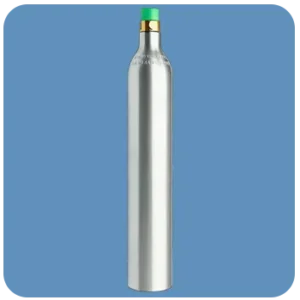
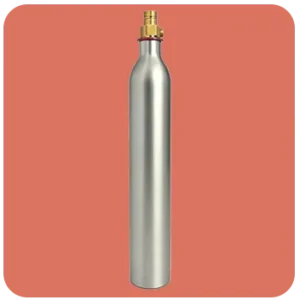
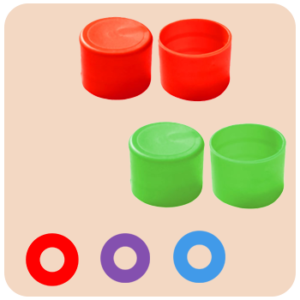
- Valve protection: Valve must have a protective cap or collar to prevent damage during handling. CGA-320 valve caps are standard for 425g cylinders
- Orientation: Cylinders should be packed upright (valve on top) whenever possible. Horizontal packing requires additional securing
- Pressure verification: Cylinder internal pressure must be verified before shipment — must not exceed rated service pressure at 55°C (the IMDG reference temperature for tropical shipping routes)
Outer Packaging (Pallet/Container Level)
| Requirement | IMDG Specification | Practical Implementation |
|---|---|---|
| Outer packaging type | Approved UN packaging (4G fiberboard box or wooden crate) | Corrugated box with UN mark, or custom wooden crate for large cylinders |
| Cylinder securing | Prevent movement within package | Cardboard dividers + foam inserts + stretch wrap per box |
| Palletization | Not specifically regulated, but industry standard | Shrink-wrapped pallets, max 4 layers for 425g cylinders, banding for security |
| Container stowage | Stowage category “A” (on deck or under deck, no restrictions) | Container floor reinforcement recommended for heavy cylinder pallets |
| Segregation | No segregation required from other Class 2.2 cargo | Segregate from Class 2.1 (flammable gas) and Class 5.1 (oxidizer) |
Container Loading Best Practices
- Container type: Standard 20ft or 40ft dry container (no temperature control required for CO2)
- Load distribution: Weight centered and low — heavy pallets on bottom layer, lighter on top
- Securing: Pallets blocked and braced to prevent shifting during vessel rolling. Use dunnage bags for gaps between pallet stacks
- Container inspection: Verify container is clean, dry, structurally sound before loading. No residual chemicals from previous cargo
- Loading capacity: 20ft container ≈ 4,000–5,000 units of 425g CO2 cylinders (approximately 20–25 pallets)
Air Freight Packaging Requirements (IATA DGR)
Important: Air freight has much stricter packaging requirements than ocean freight. CO2 cylinders shipped by air must comply with IATA DGR Packing Instruction PI 200 (for non-refillable cylinders) or PI 200 (for refillable cylinders with valve protection).
Key Air Freight Differences from Ocean Freight
| Requirement | Ocean Freight (IMDG) | Air Freight (IATA DGR) |
|---|---|---|
| Limited quantity exemption | Available (Y-label) | NOT available for Class 2.2 gases |
| Inner packaging | Cylinder + valve cap | Cylinder + valve cap + individual cushioning |
| Outer packaging | UN-approved box/crate | Strictly UN-approved 4G/4H box only |
| Max net weight per package | No limit (container level) | 75 kg per outer package (Passenger aircraft) |
| Label requirements | Class 2.2 diamond + marine pollutant if applicable | Class 2.2 diamond + cargo aircraft only label if >75kg |
| Documentation | DGD + B/L + packing list | DGD + AWB + acceptance checklist |
| Shipper training | IMDG training recommended | IATA DGR training MANDATORY (recurrent every 24 months) |
Air Freight Shipper Responsibilities
- Shipper’s Declaration for Dangerous Goods (DGD): Must be completed by trained, certified shipper — not the freight forwarder
- Training requirement: IATA Category 3 (shippers of dangerous goods) training certificate required. No exceptions
- Carrier acceptance: Airlines will reject shipments without proper DGD, training certificates, and packaging documentation
- Cost premium: Air freight for CO2 cylinders costs 3–5× ocean freight per unit. Only justified for sample orders or emergency restocking
Labeling Requirements: Every Mark Must Be Correct
Primary Labels (Required on Every Outer Package)
- Class 2.2 Diamond Label: Green diamond with white border, “2.2” at bottom, cylinder/pressure icon in center. Must be visible on at least two opposing sides of the outer package
- UN Number: “UN 1013” displayed adjacent to the Class 2.2 label in black text on white background, minimum 12mm character height
- Proper Shipping Name: “CARBON DIOXIDE” printed on outer package
- Orientation Label (if applicable): Arrows pointing upward if cylinders must be transported upright
- Package Marking: UN packaging symbol (the “UN” in circle with packaging code, e.g., 4G/Y145/S/99/CN/XXX)
Additional Labels (Specific Transport Modes)
- Ocean freight: Marine pollutant label (if applicable — CO2 itself is not a marine pollutant, but some valve lubricants may be)
- Air freight: “Cargo Aircraft Only” label if package exceeds passenger aircraft limits
- Road/rail (EU): ADR orange placards on vehicle (front + rear) + diamond placards on container sides
Label Placement Diagram
Each outer package must display labels in the following arrangement:
- Front face: Class 2.2 diamond (left) + UN number (right) + Proper shipping name (center)
- Opposite face: Duplicate label arrangement (same layout)
- Top/bottom: Orientation arrows (if upright transport required)
- Two adjacent sides: UN packaging code + manufacturer/supplier identification
Documentation Package: What Must Accompany Every Shipment
Required Documents by Transport Mode
| Document | Ocean Freight | Air Freight | Road/Rail (EU) |
|---|---|---|---|
| Shipper’s Declaration (DGD) | ✅ Required | ✅ Required (IATA format) | ✅ Required (ADR format) |
| Bill of Lading / AWB | ✅ B/L with DG notation | ✅ AWB with DG notation | ✅ CMR with DG notation |
| Packing List | ✅ Required | ✅ Required | ✅ Required |
| Commercial Invoice | ✅ Required | ✅ Required | ✅ Required |
| Certificate of Conformance | ✅ Recommended | ✅ Recommended | ✅ Recommended |
| DOT/CE Certification | ✅ Required at destination | ✅ Required at destination | ✅ Required at destination |
| MSDS / SDS | ✅ For CO2 gas | ✅ For CO2 gas | ✅ For CO2 gas |
| Container Packing Certificate | ✅ Required | — | — |
| Emergency Response Information | ✅ Required | ✅ Required | ✅ Required |
| Shipper’s Training Certificate | Recommended | ✅ Mandatory | ✅ Mandatory |
DGD Template for CO2 Cylinder Shipment
The Shipper’s Declaration for Dangerous Goods must include:
- Shipper: Name, address, telephone number
- Consignee: Name, address, telephone number
- Transport details: Aircraft type / vessel name / vehicle type
- DG entry:
- UN Number: 1013
- Proper shipping name: Carbon dioxide
- Class: 2.2
- Packing group: —
- Packing instruction: PI 200 (air) / P200 (sea)
- Number and type of packages: e.g., “5 wooden crates, UN 4G”
- Net quantity per package: e.g., “425g × 200 = 85kg per crate”
- Emergency contact: 24-hour telephone number for emergency response advice
- Declaration: “I declare that all of the applicable air transport requirements have been met”
Customs & Import Compliance at Destination
HS Code Classification for CO2 Cylinders
| Product | HS Code | Description | Typical Import Duty Rate |
|---|---|---|---|
| Empty aluminum CO2 cylinder | 7611.00 | Aluminum containers for compressed gas | US: 3.4% / EU: 0–3% / JP: 0% |
| CO2 cylinder (filled with gas) | 2815.20 (CO2) + 7611.00 (cylinder) | Gas + container (dual classification) | Varies by country — gas may have higher duty |
| CO2 cylinder valve | 8481.80 | Valves for gas cylinders | US: 3.5% / EU: 2.7% |
Customs tip: Ship empty cylinders whenever possible. Filled cylinders face dual HS classification, higher duty rates, additional dangerous goods handling fees at destination customs, and in some countries (e.g., India, Brazil), restrictions on importing pressurized gas containers. Filling at destination with locally sourced CO2 eliminates these barriers.
Country-Specific Import Requirements
- United States: DOT permit required for gas cylinder import. EPA Form 3540-1 if gas contains regulated substances. FDA prior notice if for food use
- European Union: CE marking mandatory. TPED conformity assessment for pressure vessels >0.5 bar. REACH registration for aluminum alloy materials
- Japan: High Pressure Gas Safety Act compliance. PSE certification for certain cylinder types. Ministry of Economy notification required
- Australia: AS 2030.1 compliance for gas cylinder import. WorkSafe registration in each state
Dangerous Goods Shipping Checklist
Pre-Shipment Checklist (Before Container Loading)
- ✅ All cylinders proof-tested within 12 months of shipment date
- ✅ Valve protection caps installed on every cylinder
- ✅ Class 2.2 diamond labels affixed to all outer packages (two opposing sides)
- ✅ UN number “1013” displayed adjacent to class labels
- ✅ Proper shipping name “CARBON DIOXIDE” on all outer packages
- ✅ UN packaging code visible on outer packages (4G/Y145/S or equivalent)
- ✅ Shipper’s Declaration for Dangerous Goods completed and signed
- ✅ MSDS/SDS for CO2 gas included in documentation package
- ✅ Emergency response information card prepared
- ✅ Container packing certificate completed (ocean freight)
- ✅ Shipper DG training certificate current and available (air freight)
- ✅ Commercial invoice with correct HS codes (7611.00 for empty cylinders)
- ✅ Packing list with gross/net weight per package
- ✅ Destination country import permits obtained (if required)
- ✅ Pallets secured, blocked, and braced within container
Documentation Package Checklist
- ✅ DGD (Dangerous Goods Declaration) — signed by certified shipper
- ✅ B/L (Bill of Lading) — with DG clause notation
- ✅ Commercial Invoice — HS code, value, origin
- ✅ Packing List — quantity, weight, package type
- ✅ Certificate of Origin — preferential trade agreement eligibility
- ✅ Certificate of Conformance — product meets destination standard
- ✅ DOT/CE/TPED Certification — pressure vessel compliance proof
- ✅ SDS (Safety Data Sheet) — CO2 gas hazard information
- ✅ Emergency Response Card — IMDG emergency schedule number
- ✅ Container Packing Certificate — per IMO/IMDG requirements
Conclusion
Shipping CO2 cylinders internationally isn’t just logistics — it’s regulated dangerous goods transport with strict packaging, labeling, and documentation requirements that vary by transport mode and destination country. A single missing label can cost you $500/day in port storage fees. An incorrect HS code can trigger 100% customs inspection. An incomplete DGD can get your entire shipment rejected at the airport.
VS Cylinder provides complete dangerous goods shipping documentation with every export order — including DGD preparation, proper labeling, container packing certificates, and destination country compliance guidance. We ship DOT/CE/TPED certified cylinders with valve protection caps, UN-approved packaging, and full QC documentation. Contact us to discuss your shipping requirements and get a compliant logistics plan for your target market.
Need help navigating dangerous goods regulations for your CO2 cylinder import? Request a shipping compliance consultation — we’ll prepare the complete documentation package for your destination market.