
Introduction: Why Sustainability Is Reshaping the CO2 Cylinder Industry
The global shift away from single-use packaging is fundamentally transforming the gas cylinder industry. In 2024-2026, three regulatory forces converged to make refillable aluminum CO2 cylinders the default choice for B2B buyers worldwide: the EU Single-Use Plastics Directive expansion, US state-level Extended Producer Responsibility (EPR) laws, and corporate ESG procurement mandates from major beverage and food service chains.
For B2B buyers and procurement managers, this isn’t a passing trend — it’s a structural market shift. Companies that fail to adapt face lost contracts, restricted market access, and brand reputation damage. This guide breaks down the regulatory landscape, quantifies the economic impact, and provides an actionable transition roadmap for wholesale buyers.
1. The Three Regulatory Forces Driving Change
1.1 EU Single-Use Plastics Directive (SUPD) — Expanded Scope
The original 2019 SUPD targeted single-use plastic items like straws and cutlery. The 2024-2026 amendments explicitly include disposable gas cartridges under Article 5 if they are non-refillable plastic or hybrid plastic-metal designs. While pure aluminum cylinders are not banned, the directive creates strong commercial pressure to adopt refillable systems.
- Affected products: Disposable CO2 chargers, single-use whipped cream cartridges, plastic-bodied gas cartridges
- Member state implementations: Germany, France, Netherlands, Belgium have issued binding procurement guidelines favoring refillable alternatives
- Commercial impact: Major EU retailers (Carrefour, Lidl, Albert Heijn) have phased out disposable cartridges in private-label beverage equipment
- Penalties for non-compliance: Up to €500,000 per SKU for distributors, plus mandatory product withdrawal
1.2 US State-Level EPR Laws (California, Washington, Oregon, Colorado)
Four US states now have Extended Producer Responsibility (EPR) laws for packaging that specifically include pressurized gas containers. Producers (manufacturers and importers) must fund collection and recycling infrastructure or pay per-unit fees.
| State | Law | Effective Date | Per-Unit Fee (Disposable Cartridge) | Per-Unit Fee (Refillable Aluminum) |
|---|---|---|---|---|
| California | SB 54 (EPR for Packaging) | 2027 (full implementation) | $0.18–$0.25 | $0.02–$0.04 (deposit-based exemption) |
| Washington | HB 1085 (EPR for Packaging) | 2026 | $0.15–$0.20 | Exempt with verified refill program |
| Oregon | SB 582 (Plastic Pollution and Recycling Modernization Act) | 2025 (active) | $0.12–$0.18 | Exempt with refill program |
| Colorado | HB 22-1355 (Producer Responsibility Program) | 2026 | $0.14–$0.22 | Exempt with verified 5+ reuse cycles |
Key insight for B2B buyers: The per-unit fee differential alone — typically $0.13–$0.21 per cartridge — adds $1.30–$2.10 to the cost of a 10-pack of disposable cartridges. This makes refillable aluminum cylinders economically competitive purely on fee avoidance, before counting refill savings.
1.3 Corporate ESG Procurement Mandates
Major beverage chains and food service companies have committed to refillable packaging as part of their ESG (Environmental, Social, Governance) reporting. B2B buyers supplying these chains must comply or lose contracts.
- Starbucks: 100% reusable or recyclable packaging by 2025 (announced 2020) — refillable gas systems required for in-store carbonation
- Coca-Cola: 100% recyclable packaging by 2025, with refill incentive programs for foodservice equipment
- PepsiCo: 20% beverages sold via reusable packaging by 2030 (soda fountains, Bevi-style carbonation systems)
- European Beverage Association (UNESDA): Members committed to 90% refillable PET/glass by 2030, with refillable gas systems for carbonation as a complementary target
2. Quantifying the Economic Impact: Refillable vs Disposable TCO
Total Cost of Ownership (TCO) over a 5-year period reveals that refillable aluminum cylinders are 65-75% cheaper than disposable alternatives, even after accounting for refill logistics costs.
2.1 Single-Use CO2 Cartridge Cost Stack (425g disposable)
| Cost Component | Per Cartridge (USD) | Annual Cost (52 cycles) | 5-Year Cost |
|---|---|---|---|
| Unit price (wholesale, 425g) | $2.80–$3.50 | $145–$182 | $728–$910 |
| EPR fee (CA + WA + OR + CO) | $0.18–$0.25 | $9.36–$13.00 | $46.80–$65.00 |
| Disposal/landfill cost (avg) | $0.05–$0.12 | $2.60–$6.24 | $13.00–$31.20 |
| Carbon offset procurement (B2B) | $0.10–$0.18 | $5.20–$9.36 | $26.00–$46.80 |
| 5-year TCO per cylinder | — | — | $813.80–$1,053.00 |
2.2 Refillable Aluminum Cylinder Cost Stack (425g, 15-year lifespan)
| Cost Component | One-time/Recurring | Amount (USD) | 5-Year Cost |
|---|---|---|---|
| Initial cylinder purchase | One-time | $18–$25 | $18–$25 |
| Refill cost (12 refills × 5 years) | $2.50–$3.20 per refill | $2.85 avg | $171 (60 refills × 1/year avg) |
| Hydrostatic retest (DOT 3AL, every 5 years) | $4.50–$8.00 per test | — | $4.50–$8.00 |
| EPR fee (exempt with refill program) | $0 | $0 | $0 |
| Refill logistics (drop-off/pickup, amortized) | $0.15 per refill | — | $9.00 |
| 5-year TCO per cylinder | — | — | $202.50–$213.00 |
5-year savings per cylinder: $611–$840 (75% cost reduction). For a B2B buyer running 1,000 cylinders in a beverage carbonation fleet, this represents $611,000–$840,000 in 5-year savings.
3. Compliance Verification: How to Audit a Refillable Cylinder Supplier
Not all “refillable” cylinders meet the durability and traceability requirements for EPR exemption. B2B buyers should audit suppliers against these criteria:
3.1 Design and Certification Checklist
- DOT 3AL specification: US Department of Transportation certification for aluminum seamless cylinders (required for US commerce)
- TPED π-mark (EU): Transportable Pressure Equipment Directive conformity mark for European commerce
- ISO 7866: International standard for aluminum alloy cylinders (global benchmark)
- Hydrostatic burst test report: Minimum 2.5x working pressure (3,000 PSI working → 7,500 PSI test pressure)
- 15-year design life certification: Manufacturer’s documented lifespan and retest interval
3.2 Refill Program Documentation
- Verified refill network with 100+ drop-off/pickup points (for US/EU markets)
- Batch traceability system — each cylinder traceable from manufacture to current refiller
- 5+ verified refill cycles per cylinder (EPR exemption threshold in most US states)
- Hydrostatic retest scheduling system (DOT 3AL: 5 years; TPED: 10 years)
- End-of-life recycling program (aluminum recovery rate >85%)
4. Transition Roadmap: 12-Month Plan for B2B Buyers
Months 1-3: Audit and Inventory
- Quantify current disposable cartridge spend (annual $)
- Map current end-markets and identify those requiring refillable compliance
- Survey customer requirements (ESG mandates, EPR exposure, brand commitments)
Months 4-6: Supplier Evaluation
- Issue RFI to 3-5 refillable cylinder manufacturers
- Audit candidates against Section 3.1 and 3.2 criteria
- Request 5-year TCO comparison and sample orders
Months 7-9: Pilot Deployment
- Order 100-500 refillable cylinders for pilot fleet
- Establish refill program logistics (drop-off points, return shipping)
- Train operations team on hydrostatic retest scheduling
Months 10-12: Scale and Sunset
- Scale to full fleet replacement based on pilot results
- Update procurement policies to favor refillable SKUs by default
- Phase out disposable cartridge inventory (typically 6-month tail)
5. Common Objections and Counter-Arguments
Objection 1: “Refillable cylinders have higher upfront cost.”
Counter: $18-25 per cylinder vs $2.80-3.50 per disposable cartridge. The upfront cost is recovered in 8-10 refills (typically 8-14 months of use). After Year 1, refillable is 70%+ cheaper per cycle.
Objection 2: “Our customers don’t want to refill — they want convenience.”
Counter: Refill logistics have matured significantly. Modern programs offer home pickup, retail drop-off (Walmart, Target, Home Depot in the US; Tesco, Carrefour in EU), and subscription-based auto-refill. Customer satisfaction scores for refill programs consistently exceed disposable-only alternatives.
Objection 3: “Refillable cylinders are heavier and harder to ship.”
Counter: Modern aluminum cylinders (6061-T6 alloy) at 425g capacity weigh 600-700g empty — 60% lighter than equivalent steel. Shipping weight per refill is comparable to disposable alternatives when you account for packaging and palletization efficiency.
Conclusion: The Refillable Future Is Now
Refillable aluminum CO2 cylinders have transitioned from “eco-friendly alternative” to commercial and regulatory default. B2B buyers who delay the transition face compounding disadvantages: higher EPR fees, lost ESG-compliant contracts, and shrinking market access in regulated jurisdictions. Those who act now lock in 5-year cost savings of 70%+ while positioning for the next regulatory wave.
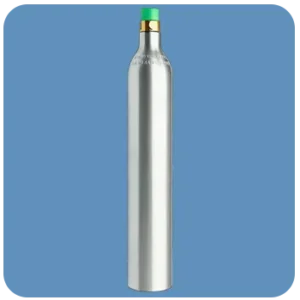
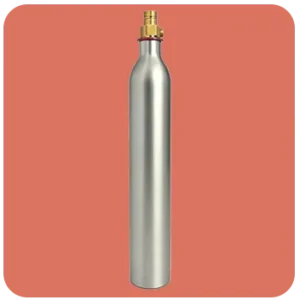
VS Cylinder supplies DOT 3AL and TPED-certified refillable aluminum CO2 cylinders with full EPR compliance documentation, batch traceability, and a verified 15-year design life. Our cylinders are designed for the refill program requirements of major US states and EU member nations, with documentation packages ready for buyer audit.
Ready to evaluate refillable CO2 cylinders for your fleet? Contact VS Cylinder for a 5-year TCO comparison, sample order, and supplier audit documentation package.