
CO2 Cylinder Recycling and Reuse: Circular Economy for Refillable Aluminum Cylinders
Every year, over 50 million CO2 cylinders reach end-of-service in the global market. Most are discarded, but a growing share are being recovered, inspected, refurbished, and returned to service. The circular economy for refillable aluminum CO2 cylinders is gaining momentum as manufacturers, distributors, and end users seek to reduce environmental impact, comply with new sustainability regulations, and capture cost savings. This guide covers the recycling and reuse lifecycle of CO2 cylinders, the regulatory landscape driving change, and how B2B manufacturers can build closed-loop programs that turn sustainability into competitive advantage.
The Lifecycle of a Refillable CO2 Cylinder
Understanding where recycling and reuse fit into the cylinder lifecycle helps B2B buyers and manufacturers identify value recovery opportunities:
- Raw material extraction: Aluminum ingot production from bauxite or recycled scrap. Recycled aluminum uses only 5% of the energy required for primary aluminum
- Cylinder manufacturing: Extrusion, drawing, heat treatment, machining, and valve assembly
- First fill: Initial CO2 charging by the gas producer or distributor
- Active service: 15-20+ years of refill cycles (DOT requires 5-year retest intervals; cylinders can be re-qualified indefinitely)
- End of first service: When the cylinder is no longer economical to refill (rust, damage, valve failure, or owner upgrade), it enters the recovery stream
- Recovery and sorting: Empty, depressurized cylinders are collected, sorted by alloy, and inspected
- Refurbishment OR recycling: Refillable cylinders go through hydrostatic retest and either return to service or are melted for aluminum recovery
Why Refillable Cylinders Are the Sustainability Winner
Single-use disposable CO2 cartridges (the 12g and 16g threaded cartridges used in consumer sparkling water makers) are a sustainability problem. The 425g and larger refillable cylinders are the opposite. Here is the math:
- Disposable cartridges: 50-100 uses of CO2 per kg of steel cartridge. Steel has high embodied energy and short service life
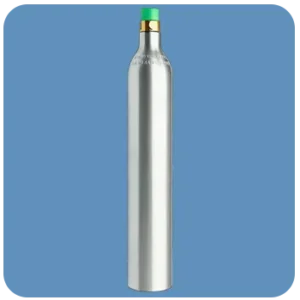
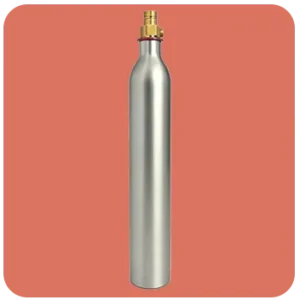
- 425g refillable aluminum cylinder: 60-80 refills, 15+ year service life, and at end of life the aluminum is fully recyclable with minimal quality loss
- 5L commercial refillable cylinder: 500+ refills, 20+ year service life, ultimate value recovery for industrial buyers
A single 5L CO2 cylinder used for 20 years and then recycled offsets the equivalent of 200-300 disposable cartridges. For B2B buyers managing soda fountains, paintball fields, or aquaculture operations, switching to refillable cylinders is both an economic and environmental win.
EU and US Regulations Driving Circular Cylinder Programs
Regulatory pressure is accelerating the shift to circular cylinder models. The three biggest regulatory drivers:
1. EU Single-Use Plastics Directive (SUPD)
The EU Single-Use Plastics Directive 2019/904 has been interpreted by some member states to cover disposable CO2 cartridges. While refillable cylinders are explicitly excluded, several EU countries (Germany, France, Netherlands) have introduced producer responsibility schemes that favor refillable systems. The result: distributors increasingly stock refillable 425g cylinders and offer cartridge take-back programs.
2. EU Right to Repair and Right to Refill Initiatives
The EU Right to Repair Directive 2024/1791 emphasizes product longevity and repairability. Although CO2 cylinders are not directly covered, the broader cultural shift toward “refill, not replace” is driving consumer preference for refillable systems. SodaStream and other major brands have responded by committing to 100% refillable cylinders by 2030.
3. US State-Level Extended Producer Responsibility (EPR)
Several US states (California, Washington, Oregon) have introduced packaging EPR laws. While the initial scope is consumer packaging, refillable gas cylinder programs are increasingly viewed as compliance-friendly because they keep aluminum in the productive economy.
Cylinder Recovery and Inspection Process
When a refillable cylinder reaches end of first service, the recovery process is rigorous to ensure safety. Every returned cylinder must pass the same hydrostatic and visual inspection as a newly manufactured cylinder before being returned to service.
Step 1: Depressurize and Empty
- Residual CO2 is vented through the valve into a collection system (CO2 can be captured, filtered, and resold for industrial use)
- The cylinder is purged with nitrogen to remove moisture and residual gas
- Valve is removed and the cylinder is tagged for inspection
Step 2: Visual and Dimensional Inspection
- External surface: rust, dents, gouges, thread damage, valve seat damage
- Internal surface (via borescope): corrosion, pitting, scale buildup
- Dimensional checks: wall thickness at multiple points, neck thread dimensions, base shape
- Marking legibility: serial number, standard designation, date stamps must all be readable
Step 3: Hydrostatic Retest
- Same test as production: pressurize to 5/3 working pressure, measure total and permanent expansion
- Permanent set must be below 10% to qualify for return to service
- Cylinders failing retest are condemned and sent to aluminum recycling
Step 4: Refurbishment (if passing)
- External surface cleaning (sandblasting, chemical cleaning, or repainting)
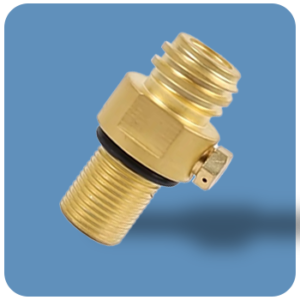
- New valve assembly (always replace the valve, never reuse)
- New markings stamped (re-test date, new serial if required)
- Re-paint with brand colors and labeling
Step 5: Re-certification
- Third-party inspection agency issues a new inspection certificate
- Cylinder is returned to the rental or refill fleet
- Service life is extended by another 5-10 years
Cylinders that fail any step in the process are condemned and sent to the aluminum recycling stream. Recovery rate is typically 60-80% — the rest are lost to long-term abandonment or damage beyond recovery.
Aluminum Recycling Economics
For cylinders that cannot be refurbished (typically 20-40% of recovered cylinders), aluminum recycling is highly economical:
- Energy required: Recycling aluminum uses 5% of the energy needed to produce primary aluminum from bauxite. For 1 ton of recycled aluminum, you save approximately 14,000 kWh of electricity
- CO2 emissions avoided: Every ton of recycled aluminum avoids 12 tons of CO2 emissions compared to primary production
- Quality: Recycled aluminum has the same quality as primary aluminum for cylinder applications. The aluminum-alloy cycle is “closed-loop” with no degradation across recycling iterations
- Market price: Recycled aluminum commands 85-95% of primary aluminum price, making cylinder recycling revenue-positive for large recovery operations
Building a Closed-Loop Program for B2B Buyers
For B2B distributors, gas suppliers, and OEM partners, building a closed-loop cylinder program creates long-term customer lock-in and ESG reporting benefits. Here is how to structure it:
Program Structure
- Cylinder deposit model: Charge a refundable cylinder deposit ($10-$30 per cylinder) at point of sale. Refund the deposit when the empty cylinder is returned
- Refill network: Set up regional refill stations (typically operated by gas suppliers) where customers can swap empty cylinders for full ones
- Take-back logistics: When shipping a full cylinder to a customer, include a prepaid return label for the empty cylinder
- Inspection facility: Operate or contract an inspection facility to retest and refurbish returned cylinders
- ESG reporting: Track refill count, recovery rate, and aluminum recycled. Report these metrics to your customers and stakeholders
Unit Economics
Closed-loop programs have favorable unit economics at scale. Example for a 425g cylinder sold to a soda machine distributor:
- Cylinder manufacturing cost: $4-6 per unit
- First sale price: $12-18 per unit (including initial CO2 fill)
- Refill price: $4-7 per refill (CO2 cost + handling + cylinder amortization)
- Customer acquisition cost amortized over 60-80 refills: $1-2 per refill
- Recovery and refurbishment cost: $2-4 per cylinder returned to service
After 5 refills, the manufacturer has recovered the cylinder cost. After 60 refills, the program generates $300-500 of pure refill revenue per cylinder. This is why SodaStream, Linde, Air Liquide, and other major gas companies have shifted from selling cylinders to selling refills as a service.
Certifications and Standards for Recycling Programs
For B2B buyers seeking verifiable sustainability credentials, look for these certifications:
- ISO 14001 (Environmental Management): Manufacturing facility certification for environmental management systems
- ISO 14021 (Environmental Labels and Declarations): Self-declared environmental claims, including recycled content
- SCS Recycled Content Certification: Third-party verification of recycled aluminum content in cylinders
- EU Circular Economy Action Plan compliance: Documentation of compliance with EU circular economy initiatives
- Carbon Trust certification: For carbon footprint claims, third-party verified
Common Pitfalls in Cylinder Recovery Programs
Closed-loop programs fail for predictable reasons. Avoid these pitfalls:
- Low recovery rate: If customers don’t return cylinders, you have a financial loss. Aim for 80%+ return rate through strong deposit incentives and convenient return channels
- Inspection cost overruns: Inspection and refurbishment cost can exceed $5 per cylinder. If your refill margin is below $5, the program is unprofitable. Optimize inspection workflow to keep cost under $3 per cylinder
- Valve replacement stockout: Refurbishment always requires a new valve. Maintain 6+ months of valve inventory to avoid refurbishment bottlenecks
- Lost cylinders in transit: Returned cylinders get lost in the logistics network. Use tracked, insured shipping and clear ownership documentation
- Mixed-alloy contamination: 6061 aluminum and other alloys look identical but have different properties. Strict sorting at the recovery facility is essential
- Brand protection: Refurbished cylinders from another brand may enter your program. Verify brand ownership before refurbishing and remarking
The Future of CO2 Cylinder Circular Economy
Three trends will shape the next 5 years of CO2 cylinder circularity:
- Refillable cartridge standardization: Industry groups are pushing for standardized refillable CO2 cartridges that fit all major soda machine brands. This would dramatically expand the refillable market
- Embedded tracking: QR codes and RFID tags embedded in cylinder shoulders for full lifecycle traceability, from manufacture through retirement
- Carbon credit monetization: Each recycled cylinder generates measurable CO2 savings that can be converted to carbon credits, providing additional revenue for recovery programs
Key Takeaways
- Refillable CO2 cylinders are inherently circular — 60-80 refills per cylinder, 15-20+ year service life, 100% recyclable at end of life
- EU and US regulations are accelerating the shift from single-use cartridges to refillable systems
- Recovery and refurbishment requires hydrostatic retest, visual inspection, valve replacement, and third-party certification
- Aluminum recycling saves 95% of the energy vs primary production, avoiding 12 tons of CO2 per ton recycled
- Closed-loop programs with deposit + refill network + inspection facility have favorable unit economics at scale
- Watch for: low recovery rate, inspection cost overruns, valve stockout, and mixed-alloy contamination
- Future trends: cartridge standardization, embedded tracking, and carbon credit monetization
The CO2 cylinder industry is at a turning point. Refillable aluminum cylinders are no longer just an environmental choice — they are an economic strategy that locks in customers, builds brand reputation, and prepares manufacturers for the regulatory landscape of the late 2020s. For B2B manufacturers, the question is not whether to invest in a circular program, but how quickly you can scale one. Start with cylinder deposit model, partner with a certified inspection facility, and track every refill. The circular economy is not a future trend — it is the present state of the smart B2B cylinder business.