
Amazon A+ Content Strategy for CO2 Cylinder B2B Sellers
Amazon A+ Content (formerly Enhanced Brand Content) is one of the most underutilized conversion tools by cross-border B2B sellers. For CO2 cylinder manufacturers selling on Amazon, A+ Content can increase conversion rates by 5-15%, reduce return rates by improving buyer understanding, and differentiate your brand from competitors who still use basic text-only listings. This guide covers how to build A+ Content that converts for CO2 cylinder products.
What Is Amazon A+ Content and Who Qualifies
A+ Content allows brand-registered sellers to add enhanced images, comparison charts, and rich text modules to their product detail pages. To qualify:
- Amazon Brand Registry: You must have an active registered trademark and be enrolled in Brand Registry
- Professional seller account: Individual accounts cannot access A+ Content
- ASIN ownership: You must be the brand owner of the ASIN (not a reseller)
- Category eligibility: CO2 cylinders fall under “Sports Collectibles” or “Kitchen” categories, both of which support A+ Content
If you sell CO2 cylinders on Amazon without Brand Registry, enrollment should be your first priority. Brand Registry also unlocks brand protection (anti-hijacking), Brand Analytics, Sponsored Brands ads, and Stores.
A+ Content Module Types and When to Use Them
Amazon offers several A+ Content module types. For CO2 cylinder products, the most effective combination is:
1. Standard Company Logo
Upload your brand logo at the top of the A+ section. Keep it clean, professional, and consistent with your website and packaging branding.
2. Standard Image with Text
Use this module for your hero image — a high-quality lifestyle photo showing the CO2 cylinder in use with a soda machine. Pair it with a headline like “Premium CO2 Cylinders for Perfect Carbonation” and a 2-3 sentence brand story.
3. Standard Multiple Image Module D
This is your workhorse module. Use 3-4 images to highlight key product features:
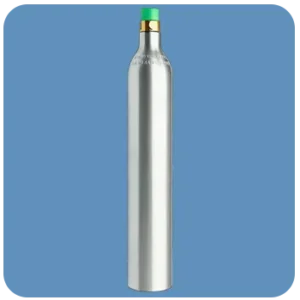
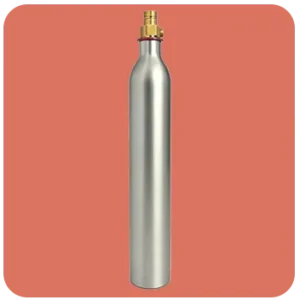
- Image 1: Cutaway or exploded view showing cylinder construction and wall thickness
- Image 2: Valve compatibility chart showing which soda machine brands it fits
- Image 3: Certification badges (CE, FDA, ISO) arranged as a trust signal
- Image 4: Packaging photo showing retail-ready individual box
4. Standard Comparison Chart
This module is incredibly powerful for B2B buyers comparing options. Create a comparison table of your different cylinder sizes:
- 425g Mini Cylinder: 3L soda water yield, fits SodaStream, 60-80 fills
- 2L Standard Cylinder: 20L soda water yield, fits most home machines, 200 fills
- 5L Commercial Cylinder: 50L soda water yield, commercial grade, 500+ fills
Include columns for: Gas capacity, compatible machines, estimated fills, dimensions, and weight.
5. Standard Technical Specification
List all technical specs in a clean table format. B2B buyers (especially procurement managers) love tables:
- Material: 6061 aluminum alloy / steel
- Working pressure: 180 bar (2610 psi)
- Test pressure: 300 bar (4350 psi)
- Burst pressure: >450 bar
- Valve type: CGA-320 / DIN 477 / proprietary thread
- Certifications: CE, DOT-3AL, ISO 7866, TC-3WM
- Hydrostatic test interval: Every 5 years
- Shelf life: Unlimited (with proper maintenance)
6. Standard Single Image and Sidebar
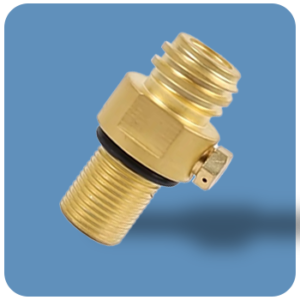
Use this module to address the most common buyer question. For CO2 cylinders, that question is always “Is this compatible with my soda machine?” Show an image of the valve thread close-up with a sidebar listing compatible brands.
Design Principles for A+ Content That Converts
Visual Hierarchy
Guide the buyer’s eye through the content in this order:
- Hero image (emotional connection: “I want this carbonation experience”)
- Feature highlights (logical justification: “This is well-made”)
- Comparison chart (decision facilitation: “Which size do I need?”)
- Technical specs (final validation: “The specs meet my requirements”)
- Certifications (trust building: “This is safe and certified”)
Image Quality Standards
- Resolution: Minimum 970 x 600 pixels; recommended 1500 x 1000 for crisp display on retina screens
- Background: Pure white (#FFFFFF) for product images; lifestyle images can use environmental backgrounds
- File format: JPEG or PNG; file size under 2MB per image
- Text in images: Keep text minimal and use large, readable fonts (minimum 14pt equivalent). Amazon compresses images, so small text becomes illegible
- Consistent styling: Use the same color palette, font, and visual style across all A+ modules
Cross-Selling with A+ Content
Use the comparison chart module to cross-sell complementary products. If you sell both 425g cylinders and 5L cylinders, show them side by side with different use cases. This increases average order value by showing buyers they might need both sizes for different applications.
A+ Content for B2B vs B2C Buyers
CO2 cylinder listings on Amazon attract both consumer and business buyers. Your A+ Content must serve both:
| Module | B2C Focus | B2B Focus |
|---|---|---|
| Hero image | Lifestyle: soda machine on kitchen counter | Professional: cylinder range with factory backdrop |
| Features | Easy to use, compatible with home machines | Volume pricing, bulk availability, certifications |
| Comparison | 425g vs 2L for home use | 2L vs 5L for commercial use |
| Specs | Simplified: capacity, fills, compatible brands | Detailed: pressure ratings, material specs, test intervals |
| Certifications | Safety badges as trust signals | Full certification numbers for compliance verification |
Balance both by placing B2C-friendly content first (emotional/lifestyle) and B2B-focused content later (specs/comparisons). This way, consumer buyers get their answers quickly while B2B buyers can scroll for technical depth.
A+ Content A/B Testing
Amazon offers A/B testing (Manage Your Experiments) for A+ Content. Test different versions to optimize conversion:
- Test 1: Hero image: Lifestyle photo vs product-only on white background. Lifestyle typically wins for B2C, product-only for B2B
- Test 2: Comparison chart: Visual comparison vs text-only table. Visual comparison usually increases time-on-page and conversion
- Test 3: Headline copy: “Premium Quality” vs “Factory Direct” vs “Certified Safe”
- Test 4: Module order: Specs-first vs features-first. B2B buyers may prefer specs-first
Run each test for 4-8 weeks to gather statistically significant data. Amazon’s experiment tool automatically calculates confidence levels and declares a winner.
Common A+ Content Mistakes
- Too much text: A+ Content is visual. Paragraphs of text defeat the purpose. Use images with minimal text overlays
- Inconsistent branding: Mixing different design styles, fonts, and color schemes across modules looks unprofessional
- Ignoring mobile: Over 50% of Amazon traffic is mobile. Complex multi-column layouts break on small screens. Test on mobile before publishing
- No comparison chart: The comparison chart is the highest-converting module. Not using it leaves money on the table
- Duplicate images: Using the same images from the main listing gallery in A+ Content. A+ images should be unique and complementary
- Promotional language: Amazon prohibits promotional text like “best seller” or “#1 rated.” Stick to factual product descriptions
- Not updating content: A+ Content should be refreshed every 6-12 months with new certifications, improved product photos, or updated compatibility lists
Measuring A+ Content ROI
Track these metrics before and after publishing A+ Content:
- Conversion rate: Unit session percentage should increase 5-15% after A+ Content goes live
- Return rate: Better product understanding reduces returns by 10-20%
- Review quality: Better-informed buyers leave more detailed, positive reviews
- Time on page: A+ Content increases average time on detail page, which Amazon’s algorithm interprets as higher relevance
- Sales velocity: Combined with improved conversion, A+ Content can boost Best Seller Rank within 4-8 weeks
Access these metrics through Brand Analytics > Search Query Performance and A+ Content reports in Seller Central.
Key Takeaways
- A+ Content requires Brand Registry — enroll first if you have not already
- Use 5-6 module types: hero image, multiple features, comparison chart, technical specs, and certifications
- Design for visual impact: high-quality images, minimal text, consistent branding
- Balance B2C and B2B content: lifestyle first, technical specs later
- Run A/B tests on hero images, headlines, and module order to optimize conversion
- Avoid common mistakes: too much text, inconsistent branding, ignoring mobile
- Track conversion rate, return rate, and review quality to measure ROI
- Refresh A+ Content every 6-12 months to keep it current
A+ Content is the single most impactful listing enhancement available to Amazon brand sellers. For CO2 cylinder B2B manufacturers, it transforms a basic product page into a professional brand storefront that builds trust with both consumer and business buyers. Invest in high-quality A+ Content design, test relentlessly, and let your brand story do the selling.