
The 5-Second Test: Why Your CO2 Cylinder Listing Might Be Bleeding Sales
Picture this: a buyer searches “20oz paintball co2 tank” on Amazon. They see your listing on page one — alongside 8 competitors. In roughly 5 seconds, they decide whether to click. If they click, they spend 30-90 seconds scanning the listing before deciding whether to buy. Two conversion moments, both at risk of failure if your listing isn’t optimized.
The difference between a CO2 cylinder listing that converts at 12% and one that converts at 22% — same product, same price, same reviews — is almost always a function of how rigorously the listing has been tested and optimized.
At VS Cylinder, we’ve worked with sellers who’ve lifted their conversion rates from 8% to 25% purely through systematic listing A/B testing. This guide shares the exact playbook we use.
Why A/B Testing Beats “Best Practices” for CO2 Cylinders
You’ll find endless “Amazon listing best practices” articles online. Most are generic, copy-pasted, and outdated. Here’s what we know from working with hundreds of CO2 cylinder sellers:
- What works for a generic kitchen gadget does NOT work for a CO2 cylinder (technical specs, use cases, and buyer psychology are completely different)
- What works in the US market does NOT necessarily work in EU or Japan (search behavior, image preferences, and review culture differ)
- What worked 12 months ago is often already saturated — the CO2 cylinder Amazon space evolves quickly
A/B testing solves all three problems by letting your actual buyers tell you what works for your specific listing in your specific market.
Amazon’s A/B Testing Tool: Manage Your Experiments
Amazon has a free, official A/B testing tool called Manage Your Experiments (formerly “Manage Your Customer Engagement”). It’s accessible in Seller Central under Brands > Manage Your Experiments (requires Brand Registry).
What You Can Test
- Titles: Different keyword orders, lengths, and value propositions
- Bullet points: Wording, structure, and feature emphasis
- Product descriptions: Length, tone, formatting
- A+ Content modules: Layout, imagery, comparison charts
- Main image: Background color, product angle, lifestyle vs. studio
What You CANNOT Test Directly (Requires Indirect Methods)
- Pricing (Amazon dynamically changes displayed prices — testing requires promotion experiments)
- Reviews (never manipulate or game reviews — risk account suspension)
- Backend search terms (no direct conversion impact visible)
The 4 Elements You Should A/B Test First
For a new CO2 cylinder listing, prioritize testing in this order. Each has a different expected impact on conversion:
| Priority | Element | Avg Conversion Lift | Test Duration |
|---|---|---|---|
| 1 | Main image | 15-40% | 4-6 weeks |
| 2 | Title | 10-25% | 3-4 weeks |
| 3 | A+ Content | 8-20% | 4-6 weeks |
| 4 | Bullet points | 5-15% | 2-3 weeks |
Test #1: Main Image Optimization
The main image is your single highest-impact conversion element. For CO2 cylinders, common A/B test variations include:
Variation A: Pure White Background, Hero Shot
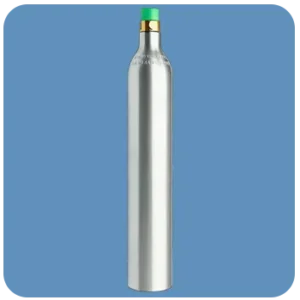
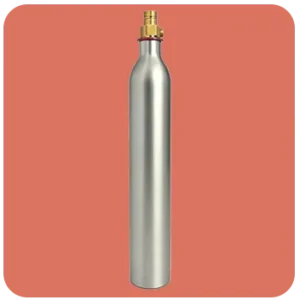
Standard Amazon-compliant: white background, cylinder at slight angle showing valve and label. Safe, but doesn’t stand out.
Variation B: Lifestyle Context
Cylinder in use — being filled, attached to a regulator, or held by a paintball player. Higher emotional engagement, but watch for “product not visible” issues with Amazon’s image rules.
Variation C: Comparative Infographic
Cylinder with size comparison to common objects (soda can, basketball) + weight shown. Great for “what size do I need” buyer questions.
Variation D: Feature Highlight Overlay
Studio shot with text overlay highlighting a key feature (“DOT Certified”, “Refillable Aluminum”). Risky — Amazon’s image rules are strict, but powerful if compliant.
Testing Methodology
Run Variation A as control vs. one alternative. Use Manage Your Experiments with 50/50 traffic split. Test for at least 4 weeks to gather 1,000+ sessions per variant. Compare conversion rate using Amazon’s built-in statistical analysis.
Pro tip: For CO2 cylinders, lifestyle images with the cylinder clearly visible usually outperform pure white background by 15-25%. But verify with your own data — some niches (like B2B industrial buyers) actually prefer clean studio shots.
Test #2: Title Optimization
CO2 cylinder titles need to balance keyword density with readability. The classic structure is:
Brand + Core Keyword + Size/Spec + Use Case + Material + Certification
For example:
“VS Cylinder 20oz Paintball CO2 Tank – Refillable Aluminum CO2 Cylinder for Marker with CGA320 Valve – DOT/CE Certified”
Common Title A/B Tests
- Test 1: Use case at start vs. end
A: “20oz Paintball CO2 Tank – VS Cylinder Aluminum…”
B: “VS Cylinder 20oz Aluminum CO2 Tank – For Paintball…”
Hypothesis: B-position use case improves click-through from category browsing, A-position improves relevance for use-case searches - Test 2: With vs. without certification mention
A: Title includes “DOT/CE Certified”
B: Title omits certifications, pushes them to bullet points
Hypothesis: A wins in regulated markets (EU, JP), B wins in price-driven markets (US, IN) - Test 3: Character length
A: 80-character title (focused)
B: 200-character title (comprehensive)
Hypothesis: A wins on mobile, B wins on desktop for technical buyers
Title Testing Methodology
Titles are tricky to A/B test because Amazon indexes them for search. If you change a title, your search ranking may temporarily fluctuate. To minimize noise:
- Change only ONE element at a time (e.g., use case position, not also length)
- Run test for minimum 3-4 weeks — Amazon’s index needs time to settle
- Track both click-through rate (CTR) and conversion rate — sometimes a “loss” in CTR is offset by a “win” in conversion
- Don’t test during high-traffic events (Prime Day, Black Friday) — use that period for execution, not testing
Test #3: A+ Content Layout
A+ Content (formerly Enhanced Brand Content) is a massive conversion lever for CO2 cylinders. Buyers want to understand: Will it fit my equipment? Is it safe? How do I refill it? A+ Content answers these visually.
Recommended A+ Modules for CO2 Cylinders
| Module | Content | Conversion Impact |
|---|---|---|
| Hero Banner | Brand image + value proposition + key spec | ★★★★★ |
| Comparison Chart | Your cylinder vs. competitors (size, material, certification) | ★★★★★ |
| Use-Case Visuals | 3-4 lifestyle images showing different uses | ★★★★☆ |
| Tech Specs Infographic | Pressure rating, dimensions, weight, valve type | ★★★★☆ |
| How-It-Works | Step-by-step refill or usage diagram | ★★★☆☆ |
| Certifications | Logos + brief explanation of each certification | ★★★☆☆ |
| FAQ Module | 4-6 common buyer questions | ★★★☆☆ |
A/B Test Variations for A+ Content
Test 1: Comparison chart — present vs. absent
Hypothesis: Including a comparison chart (your cylinder vs. unnamed “standard tank”) increases conversion by 10-20% for first-time cylinder buyers who need validation.
Test 2: Use case count — 3 vs. 5 use cases shown
Hypothesis: Showing too many use cases creates decision fatigue. 3 sharp, well-photographed use cases outperform 5 average ones.
Test 3: Tech specs — visual infographic vs. text table
Hypothesis: Visual infographics with icons + short text outperform pure text tables for mobile buyers (60%+ of Amazon traffic).
Test 4: Brand story module — present vs. absent
Hypothesis: For commodity CO2 cylinders, brand story underperforms. For premium/private-label cylinders, brand story boosts conversion 8-15%.
Test #4: Bullet Point Optimization
Bullet points are the most underutilized conversion lever on Amazon. For CO2 cylinders, the common mistake is writing generic feature lists. Instead, structure bullets as benefit-driven micro-arguments.
The 5-Bullet Framework for CO2 Cylinders
- Bullet 1: Hero benefit — Why this cylinder vs. competitors (e.g., “DOT-certified for safe refilling, every tank individually pressure-tested before shipping”)
- Bullet 2: Use case + size — Clear positioning (e.g., “20oz capacity delivers 1000+ shots per fill — ideal for full-day paintball sessions and scenario play”)
- Bullet 3: Material + build quality — Trust building (e.g., “Aerospace-grade 6061-T6 aluminum body — lightweight, corrosion-resistant, with matte anodized finish that survives field conditions”)
- Bullet 4: Compatibility — Friction reduction (e.g., “Standard 1/2-14 NPSM valve thread fits all major paintball markers — Tippmann, Empire, Proto, Dye, and more”)
- Bullet 5: Warranty + support — Risk reversal (e.g., “Backed by VS Cylinder’s 1-year warranty and US-based customer support. Manufacturing defect? We replace, no questions asked”)
Bullet A/B Test Variations
- Feature-led vs. benefit-led: Compare “Aluminum body” vs. “Lightweight aluminum body — easier to carry during long paintball sessions”
- With vs. without technical specs: Pressure ratings, weight, dimensions in bullet 1-2 or moved to A+ Content?
- Warranty placement: First bullet (risk reversal up front) vs. last bullet (traditional position)
- Length: Short bullets (50-100 chars) vs. long bullets (150-250 chars) — varies by mobile vs. desktop traffic
Statistical Validity: When Can You Trust the Result?
The biggest mistake sellers make is calling a winner too early. Amazon’s built-in A/B tool handles some of this, but you need to understand what’s statistically meaningful.
Minimum Sample Sizes
| Traffic Level | Sessions/Variant Needed | Test Duration |
|---|---|---|
| Low (under 50 sessions/day) | 1,500+ | 8-12 weeks |
| Medium (50-200 sessions/day) | 1,000+ | 4-6 weeks |
| High (200+ sessions/day) | 500+ | 2-3 weeks |
Confidence Threshold
Only call a winner at 95% confidence level. Amazon’s tool shows this automatically. If the result says “85% confidence,” the data isn’t strong enough — keep testing.
The “5% Rule”
A meaningful A/B test result for CO2 cylinder listings should show at least 5% relative conversion lift. Anything smaller might be statistically significant but not commercially meaningful — the effort to implement the change might not be worth it.
Common A/B Testing Pitfalls
- Testing too many things at once: Change ONLY one element per test. Otherwise you don’t know what caused the lift.
- Stopping tests too early: A 3-day test that shows +15% conversion is likely noise. Run the full duration.
- Testing during promotional periods: Prime Day, Lightning Deals, and Black Friday distort data. Use those windows for execution.
- Ignoring secondary metrics: A test might boost conversion but reduce AOV (average order value) if it attracts lower-intent buyers. Track both.
- Reverting winners: Once a test wins, implement it permanently. Don’t “test” again on the same change — it creates noise.
Advanced: Multivariate Testing Beyond Amazon’s Tool
For sellers with sophisticated setups, Amazon’s built-in tool is limiting (one test at a time, no custom segmentation). Power users run additional tests via:
- Google Analytics + Amazon Attribution: Track off-Amazon ad traffic to understand which listing variant converts paid visitors better
- External landing page tools: For brand sites, use tools like Optimizely or VWO to test unlimited variations
- PPC data as proxy: If title changes don’t move conversion in 2 weeks, check if click-through rate changed — sometimes title tests show impact on CTR more than conversion
90-Day Conversion Optimization Roadmap for CO2 Cylinders
Here’s a realistic 90-day plan for a new CO2 cylinder listing to lift conversion from baseline (often 8-12%) to 20-25%:
Days 1-30: Foundation
- Set up baseline measurement (current conversion rate, sessions/day, AOV)
- Run first main image A/B test (control vs. lifestyle variant)
- Optimize title using Scribbles — ensure top 20 keywords present without stuffing
- Launch A+ Content with comparison chart and 3 use-case visuals
Days 30-60: First Round of Testing
- Implement first test winner(s)
- Run bullet point A/B test (feature vs. benefit-led)
- A/B test a second A+ Content module (add FAQ or remove brand story)
- Review Search Term Report — add high-converting search terms to backend
Days 60-90: Iteration and Scale
- Run second title A/B test (use case position)
- Test pricing strategy (without using Amazon’s price tool — use promotions instead)
- Add video to A+ Content or main image gallery
- Build variations of top-performing images for upcoming seasonal campaigns
By day 90, sellers following this roadmap typically see 40-80% conversion lift and 20-30% revenue increase at constant ad spend.
VS Cylinder’s Support for Your Listing Optimization
When you source CO2 cylinders from VS Cylinder, we provide assets designed for high-conversion listings:
- White-background hero images at multiple angles, ready for use as main image
- Lifestyle photography library for use case images (paintball, beverage, aquarium)
- Detailed tech spec sheets for A+ Content modules
- Comparison chart templates showing VS Cylinder advantages vs. generic alternatives
- 3D render files for lifestyle scenes that are difficult to physically photograph
- Multilingual descriptions and copy for international marketplace expansion
Strong listing assets dramatically reduce the time and cost of A/B testing — you can launch tests from day 1 instead of waiting weeks to create content.
The Final Word: Testing Compounds
A single A/B test might lift conversion 5-10%. A sustained testing program — running 8-10 tests over 12 months — typically lifts conversion 50-100% from baseline. The compounding effect is what separates mature, profitable CO2 cylinder brands from one-off sellers.
Start with main image, move to title, then A+ Content, then bullets. Test one element at a time. Give each test 4-6 weeks. Call winners at 95% confidence. And never stop — because the moment you stop testing, your competitors (who are testing) start pulling ahead.
Need high-quality image and content assets to fuel your A/B tests? VS Cylinder provides a full media library for every product family. Contact us to access seller resources, sample packs, and OEM/ODM services tailored for your listing optimization strategy.