

Introduction: Why Customs Clearance Matters for CO2 Cylinder Exporters
For B2B CO2 cylinder manufacturers and exporters, customs clearance is not just a paperwork exercise — it is a critical link in the supply chain that directly affects delivery timelines, landed costs, and customer satisfaction. A single misclassified HS code or incomplete documentation can result in port delays, demurrage charges, and even cargo seizure. For buyers sourcing CO2 cylinders from China, understanding the customs clearance process and tariff optimization strategies can mean the difference between a profitable procurement and a logistical nightmare.
At VS Cylinder, we have helped hundreds of international buyers navigate the complexities of importing aluminum CO2 cylinders, paintball tanks, and soda machine cylinders. In this comprehensive guide, we break down everything you need to know about customs clearance for CO2 cylinder imports — from HS code classification and required certifications to duty optimization and regional trade agreement benefits.
HS Code Classification for CO2 Cylinders
The Harmonized System (HS) code is the foundation of international trade classification. For CO2 cylinders and related products, the correct HS code determines the applicable duty rates, regulatory requirements, and trade statistics reporting. Misclassification is one of the most common — and most costly — mistakes made by importers.
Primary HS Codes for CO2 Cylinders
The core HS code for aluminum CO2 cylinders falls under Chapter 73 (Articles of Iron or Steel) or Chapter 76 (Aluminum and Articles Thereof), depending on the material composition:
- 7311.00 — Containers for compressed or liquefied gas, of iron or steel. This applies to steel CO2 cylinders used in industrial and medical applications. Duty rates typically range from 0% to 5% in most countries.
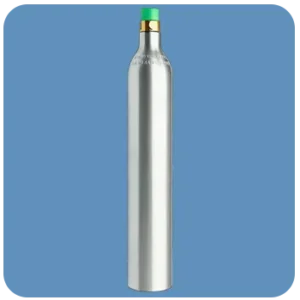
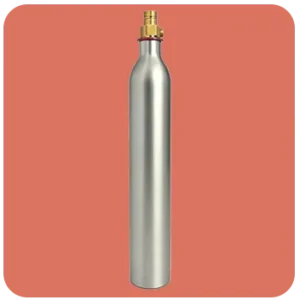
- 7613.00 — Aluminum containers for compressed or liquefied gas. This is the most common classification for aluminum CO2 cylinders used in soda machines, paintball, and beverage dispensing. Most countries apply 0-3% duty under this code.
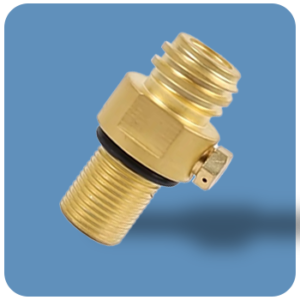
- 8481.80 — Valves, taps, and cocks for gas cylinders. CO2 cylinder valves (both screw-in and quick-connect types) are classified separately under this machinery heading.
- 9020.00 — Breathing appliances and gas masks (for paintball/SCBA cylinders when imported as part of complete systems).
How to Verify the Correct HS Code
To ensure accurate classification, importers should:
- Consult the WCO Harmonized System database — The World Customs Organization maintains the official HS nomenclature with explanatory notes that clarify scope and exclusions.
- Request a Binding Ruling — Many customs authorities (such as US CBP, UK HMRC) offer binding tariff information rulings. These provide legally binding HS code determinations for your specific product.
- Work with a licensed customs broker — Professional brokers have deep experience with gas cylinder classifications and can advise on country-specific nuances.
- Leverage your supplier’s knowledge — Established manufacturers like VS Cylinder have extensive export experience and can provide the correct HS codes used in previous successful shipments to your country.
Essential Documentation for CO2 Cylinder Customs Clearance
A complete and accurate documentation package is the single most important factor in smooth customs clearance. For CO2 cylinder imports, the following documents are typically required:
Core Documents Required
| Document | Purpose |
|---|---|
| Commercial Invoice | Shows transaction value, seller/buyer details, product description, HS codes, and terms of sale |
| Packing List | Details quantities, weights, dimensions, and packaging types for each item in the shipment |
| Bill of Lading (Sea) or Air Waybill | Transport document issued by the carrier confirming receipt of goods |
| Certificate of Origin | Verifies the country of manufacture; essential for claiming preferential duty rates under FTAs |
| Product Certification Documents | CE, DOT, TC, UN, or other certification required by destination country regulations |
| Dangerous Goods Declaration | Required when shipping filled or pressurized cylinders; declares the hazardous nature of the cargo |
| Test Reports & Mill Certificates | Hydrostatic test certificates, material composition reports, and pressure test documentation |
Special Documentation for Empty vs. Filled Cylinders
A critical distinction that affects customs clearance is whether the CO2 cylinders are shipped empty or filled. Empty cylinders (purged and depressurized) are classified as non-hazardous for transport and require simpler documentation. Filled cylinders require Dangerous Goods (DG) declarations, UN specification packaging, and specific labeling. Most B2B importers source empty cylinders and fill them locally to avoid the additional cost and complexity of shipping filled pressure vessels.
Tariff Optimization Strategies for CO2 Cylinder Importers
Import duties can significantly impact the landed cost of CO2 cylinders, especially for high-volume B2B procurement. Smart importers use multiple strategies to minimize their tariff burden legally and ethically.
Strategy 1: Leverage Free Trade Agreements
China has entered into numerous bilateral and multilateral free trade agreements that can reduce or eliminate import duties on manufactured goods including CO2 cylinders:
- RCEP (Regional Comprehensive Economic Partnership) — Effective for trade between China and ASEAN countries, Japan, South Korea, Australia, and New Zealand. Many CO2 cylinder products qualify for reduced or zero tariffs under RCEP rules of origin.
- China-ASEAN FTA — Covers Southeast Asian markets including Thailand, Vietnam, Indonesia, Malaysia, Philippines, and Singapore. Aluminum gas containers (HS 7613) typically qualify for 0% duty under Form E.
- China-Australia FTA (ChAFTA) — Australian importers can claim preferential rates on Chinese-manufactured CO2 cylinders with a valid Certificate of Origin (Form A).
- China-Korea FTA — South Korean buyers benefit from reduced duty rates on Chinese CO2 cylinder imports.
To claim FTA benefits, ensure your supplier provides the correct certificate of origin format (Form E, Form A, etc.) and that the goods meet the origin criteria (typically 40%+ regional value content or specific manufacturing process requirements).
Strategy 2: Optimize Incoterms
The choice of Incoterms affects who bears the customs clearance responsibility and duty payment obligation:
- FOB (Free On Board) — Buyer arranges shipping and handles import clearance. Most common for experienced importers who have their own freight forwarder relationships.
- CIF (Cost, Insurance, Freight) — Seller arranges shipping to destination port. Buyer still handles import clearance but has less control over carrier selection.
- DDP (Delivered Duty Paid) — Seller handles everything including import duties. Convenient but typically more expensive as the seller builds in a risk premium.
For B2B CO2 cylinder procurement, FOB is generally the most cost-effective option when the buyer has import experience. CIF can be a good middle-ground for first-time importers who want shipping arranged but can handle their own customs clearance.
Strategy 3: Duty Drawback and Bonded Warehouse Programs
Advanced tariff optimization strategies available to professional importers:
- Duty Drawback — If you import CO2 cylinders, add value through assembly or processing, and then re-export the finished product, many countries allow you to claim back the original import duties through duty drawback programs.
- Foreign Trade Zones (FTZ) / Bonded Warehouses — Store imported CO2 cylinders in a bonded facility without paying duties until the goods are released for domestic consumption. If goods are re-exported from the FTZ, duties are never due.
- Temporary Importation — For trade show samples, testing, or demonstration purposes, CO2 cylinders may qualify for temporary duty-free admission under ATA Carnet or similar programs.
Country-Specific Customs Requirements
United States
US Customs and Border Protection (CBP) requires CO2 cylinders to comply with Department of Transportation (DOT) regulations. Key requirements include DOT-3AL or DOT-3E specification for aluminum cylinders, mandatory hydrostatic testing every 5 years, and registration with the Pipeline and Hazardous Materials Safety Administration (PHMSA) for certain cylinder types. Importers should also be aware of Section 301 tariffs on Chinese goods — while many metal containers were subject to additional tariffs, exclusions may apply for specific HS codes.
European Union
EU imports require CE marking under the Pressure Equipment Directive (PED 2014/68/EU) and Transportable Pressure Equipment Directive (TPED 2010/35/EU). The importer must appoint an authorized representative within the EU and maintain technical documentation. VAT is assessed at import (typically 19-27% depending on member state), and the EPR (Extended Producer Responsibility) regulations may apply to packaging materials.
United Kingdom
Post-Brexit, the UK requires UKCA marking (replacing CE for most products by 2025) for pressure equipment. Importers need a UK-based responsible person and must comply with UK REACH regulations for chemical substances. UK import VAT of 20% applies, and the Customs Declaration Service (CDS) is now the mandatory platform for all import declarations.
Southeast Asia (ASEAN)
ASEAN countries generally have lower tariff barriers for Chinese goods due to the ASEAN-China FTA. However, each country has specific certification requirements — Thailand’s TISI standards, Indonesia’s SNI certification, and Vietnam’s QCVN regulations may apply to gas cylinders. Working with a local agent who understands country-specific import licensing is essential.
Common Customs Clearance Pitfalls to Avoid
- Undervaluation on commercial invoice — Deliberately understating the value of goods to reduce duties is customs fraud and carries severe penalties including fines, cargo seizure, and potential legal action.
- Incomplete product description — Descriptions like “metal containers” or “gas tanks” are too vague. Customs authorities expect specific descriptions like “Aluminum CO2 gas cylinder, empty, DOT-3AL, 24oz capacity, red painted finish.”
- Missing or expired certifications — Sending cylinders without valid certification documentation will result in customs holds. Ensure all test certificates are current and dates are clearly visible.
- Incorrect declared weight — Discrepancies between declared weight and actual weight trigger inspections, delays, and potential penalties.
- Ignoring anti-dumping duties — Some countries have anti-dumping measures on specific metal products from China. Always check Trade Remedies databases before shipping to a new market.
How VS Cylinder Supports Your Customs Clearance Process
At VS Cylinder, we take a proactive approach to customs compliance. Our export documentation package includes:
- Detailed commercial invoice with correct HS codes for each product
- Certificate of Origin (available in Form E, Form A, and other formats as required)
- Product test certificates and material composition reports
- CE, DOT, and other certification documentation as applicable
- Expert guidance on HS code classification for your specific import country
With over a decade of export experience to more than 50 countries, our logistics team understands the customs requirements of each destination market and can help you avoid costly clearance delays.
Conclusion
Successful CO2 cylinder importing requires more than finding the right product at the right price — it demands a thorough understanding of customs clearance procedures, tariff optimization strategies, and country-specific regulatory requirements. By classifying your products correctly, preparing complete documentation, leveraging free trade agreements, and working with experienced suppliers like VS Cylinder, you can minimize customs-related costs and delays while maintaining full compliance with import regulations.
Ready to source CO2 cylinders for your market? Contact VS Cylinder today for a detailed quote including estimated duty rates and customs guidance for your country.