
Why TCO Beats Unit Price in CO2 Cylinder Procurement
For B2B buyers placing CO2 cylinder orders of 500-5,000 units, the unit price quoted by the supplier represents 30-55% of the actual lifetime cost of the cylinder. The rest hides in valve choices, refill economics, certification renewal, logistics damage, and end-of-life handling.
VS Cylinder’s B2B team has worked with procurement teams across beverage, paintball, medical, and industrial gas segments for over a decade. We see the same pattern repeatedly: the supplier offering the cheapest unit price is rarely the lowest TCO supplier. This guide walks B2B procurement leaders through the TCO framework we use to help buyers compare options properly.
The Five Cost Layers of CO2 Cylinder Ownership
A complete CO2 cylinder TCO model includes five cost layers. Most B2B buyers only consider the first one.
Layer 1: Acquisition Cost (30-55% of TCO)
- Cylinder body (aluminum or steel, sized to market need)
- Valve assembly and fitting
- Initial hydrostatic test and certification stamp
- Customer branding or color specification
- Packaging for export shipment
Layer 2: Inbound Logistics (8-18% of TCO)
- Ocean freight or air freight (depending on urgency)
- Customs duties and import VAT/Sales Tax
- Destination port handling and trucking
- Insurance during transit
- Inspection on arrival
Layer 3: Operational Costs (15-35% of TCO)
- Refilling charges (the dominant OPEX for refill-based business models)
- Periodic hydrostatic re-qualification (typically every 10 years, sometimes 5)
- Maintenance (valve replacement, repaint, foot ring repair)
- Storage and handling between fills
- Insurance on the cylinder fleet
Layer 4: Certification and Compliance (3-8% of TCO)
- Document renewal for DOT, TPED, ISO, and country-specific marks
- Periodic audits by notified bodies
- Environmental reporting (especially EU CSRD, US state ESG rules)
- Internal compliance staff time
Layer 5: End-of-Life (2-10% of TCO)
- Cylinder retirement after 15-30 years of service
- Scrap value (aluminum recovers well; steel less so)
- Disposal fees for valves with regulated materials
- Reverse logistics for fleet return at program end
The acquisition layer is the easiest to negotiate. Every other layer compounds over time and quietly determines whether the fleet is a profit center or a write-off.
TCO Benchmarks Across Three Segments
VS Cylinder’s B2B team maintains TCO benchmarks across the segments we serve. Here are realistic 10-year TCO models based on buyers we have supported:
Segment 1: Premium Beverage Sparkling Water
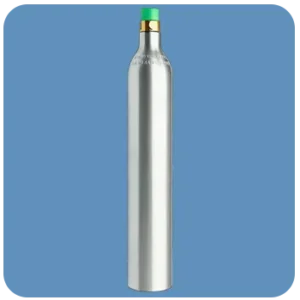
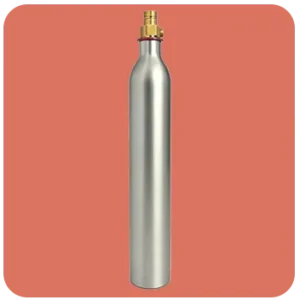
Profile: 5 lb (2.5 kg) aluminum CO2 cylinders for home sparkling water machines. Closed-loop refill program.
| Cost Layer | 10-Year Cost per Cylinder | Share |
|---|---|---|
| Acquisition (custom-branded aluminum cylinder + valve) | $28 | 22% |
| Inbound logistics (FOB China to destination market) | $9 | 7% |
| Refilling operations (assume 8 refills per year, $12 per refill) | $72 | 57% |
| Certification renewal | $4 | 3% |
| End-of-life | $13 | 10% |
| 10-Year TCO | $126 | 100% |
| Effective per-fill cost (over 10 years, 80+ fills) | $1.58 |
For beverage brands, refill operations dominate the TCO. Acquisition cost matters less than the supplier’s ability to support long refill cycle reliability.
Segment 2: Paintball Field Rental Fleet
Profile: 20 oz (0.6 kg) aluminum CO2 cylinders for paintball field rentals. High-frequency refill cycles.
| Cost Layer | 10-Year Cost per Cylinder | Share |
|---|---|---|
| Acquisition (small aluminum + standard valve) | $14 | 15% |
| Inbound logistics | $5 | 5% |
| Refilling (assume 50 fills per year at $3/fill) | $58 | 62% |
| Replacement cylinders lost/abandoned (~8% per year) | $11 | 12% |
| End-of-life | $6 | 6% |
| 10-Year TCO | $94 | 100% |
| Effective per-fill cost (over 500 fills) | $0.19 |
In paintball, cylinder loss rate (lost, stolen, abandoned) is the second-largest TCO component after refilling. Deposit programs and tracking technology are the most effective cost reducers here.
Segment 3: Industrial Gas Distributor Fleet
Profile: 50 lb (22.7 kg) steel CO2 cylinders for industrial gas distribution. Long-life assets, lower refill cycles.
| Cost Layer | 15-Year Cost per Cylinder | Share |
|---|---|---|
| Acquisition (steel cylinder + valve, DOT/TPED certified) | $95 | 38% |
| Inbound logistics | $32 | 13% |
| Refilling (assume 8 fills per year at $25/fill) | $80 | 32% |
| Hydrostatic re-qualification (twice in 15 years) | $28 | 11% |
| End-of-life | $15 | 6% |
| 15-Year TCO | $250 | 100% |
| Effective per-fill cost (over 120 fills) | $2.08 |
For industrial fleets, the asset cost dominates but hydrostatic re-qualification is non-trivial. Choose a manufacturer whose cylinders are easy to recertify at the lowest local cost.
Hidden TCO Drivers Most Buyers Miss
Driver 1: Cylinder Failure Rate
A 1% higher cylinder failure rate over 10 years adds 10% to effective acquisition cost. For a 1,000-cylinder fleet, that is the difference between a profitable program and a break-even one. Supplier quality consistency is TCO.
Driver 2: Valve Standard Compatibility
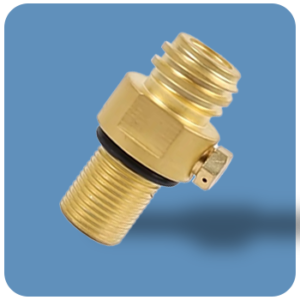
If your supplier’s valve standard does not match your customer’s fill infrastructure, every refill incurs an adapter cost or downtime. Confirm valve standard before ordering. VS Cylinder’s B2B team helps match valve standards to customer market valves.
Driver 3: Documentation Completeness
Cylinders arriving without proper certification documents are detained at customs, rejected by customers, or rejected by your refill partner. Cost of incomplete documentation averages $50-200 per shipment incident. Documentation completeness is TCO.
Driver 4: Recyclability and Scrap Value
Aluminum cylinders have meaningful scrap value at end of life ($5-15 per cylinder). Steel cylinders have less. The differential over a 1,000-cylinder fleet retiring over 5 years is $5,000-15,000.
Driver 5: Custom Branding Stability
Powder coat and screen print that fades within 2 years forces rebranding or repurchase. Good-quality branding lasts 10+ years. The difference is 5-15% of acquisition cost amortized differently.
How to Use TCO in Supplier Selection
VS Cylinder recommends three steps to put TCO at the center of supplier evaluation:
- Build a TCO spreadsheet with all five cost layers, weighted by your segment
- Request TCO data from each supplier – not just unit price
- Run sensitivity analysis on the variables with the largest impact (failure rate, refill cost, documentation gaps)
TCO Models VS Cylinder Builds for B2B Buyers
When VS Cylinder engages with a buyer placing a 1,000+ cylinder order, our B2B team builds a custom TCO model as part of the quote. The model includes:
- Your target market and valve standard
- Realistic refill economics for your customer segment
- Logistics cost modeling with current freight rates
- Certification cost for your destination market
- End-of-life value based on metal recovery market
The model is yours to keep. We use it to demonstrate where our supply chain and product design deliver the lowest TCO for your specific use case.
Get a TCO Quote from VS Cylinder
Share your target cylinder size, quantity, destination market, and customer segment. Within 5 business days, you’ll receive a custom TCO model alongside our commercial quote. Contact VS Cylinder’s B2B team to start.