
The Paintball CO2 Cylinder Market: Small Product, Big Opportunity
When most people think of CO2 cylinder markets, they picture industrial welding, beverage carbonation, or medical oxygen. But there’s a dynamic and consistently growing niche that many suppliers overlook: paintball CO2 cylinders. With an estimated global market of $150-200 million for paintball equipment and accessories (growing 4-5% annually), CO2 cylinders represent a significant and recurring revenue opportunity.
At VS Cylinder, we’ve supplied paintball-grade cylinders to distributors in North America, Europe, and Southeast Asia. This guide shares our market knowledge for anyone looking to enter this niche.
Market Overview and Size
Global Paintball Industry at a Glance
- Global market size: $1.5-2.0 billion (equipment + events + venues)
- Equipment segment: $350-500 million, with CO2/HPA cylinders ~30% of equipment spend
- Annual growth: 4-7% (driven by recreational growth in Asia and tournament expansion)
- Active players worldwide: 5-8 million (2.5M+ in North America alone)
- CO2 cylinder replacement cycle: Every 3-5 years per player (regulatory requalification + wear)
Key Geographic Markets
| Region | Market Share | Trend | Key Characteristics |
|---|---|---|---|
| North America | ~45% | Stable, mature | Tournament-driven, HPA shift |
| Europe | ~25% | Growing | Recreational + milsim, CO2 still dominant |
| Asia-Pacific | ~20% | Fastest growing | New market entry, price-sensitive, CO2 preferred |
| Latin America | ~7% | Growing | Recreational focus, CO2 dominant |
| Middle East/Africa | ~3% | Emerging | Niche, premium pricing potential |
Paintball CO2 Cylinder Specifications
Standard Sizes
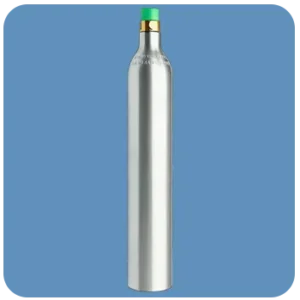
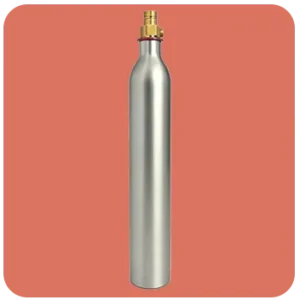
Paintball CO2 cylinders come in specific sizes optimized for play duration and maneuverability:
| Size (oz) | Water Capacity (L) | Diameter | Length | Shots per Fill | Market Popularity |
|---|---|---|---|---|---|
| 9 oz | ~0.26L | 2″ / 50mm | 8″ / 200mm | 400-500 | ★★★☆☆ (compact/pistol) |
| 12 oz | ~0.35L | 2″ / 50mm | 10″ / 250mm | 600-700 | ★★★★☆ (light rifle setup) |
| 16 oz | ~0.47L | 2″ / 50mm | 12″ / 300mm | 800-1000 | ★★★☆☆ (mid-range) |
| 20 oz | ~0.59L | 2.5″ / 63mm | 11″ / 280mm | 1000-1200 | ★★★★★ (most popular) |
| 24 oz | ~0.71L | 2.5″ / 63mm | 13″ / 330mm | 1200-1500 | ★★★☆☆ (scenario play) |
Market insight: The 20 oz cylinder is the undisputed volume leader, accounting for roughly 40-50% of paintball CO2 sales. Any supplier entering this market should lead with this size.
Material Specifications
- Body material: 6061-T6 aluminum (mandatory for lightweight handling in play)
- Working pressure: 1800 PSI (124 bar) — paintball-specific rating
- Test pressure: 3000 PSI (207 bar)
- Burst pressure: Minimum 4500 PSI (310 bar)
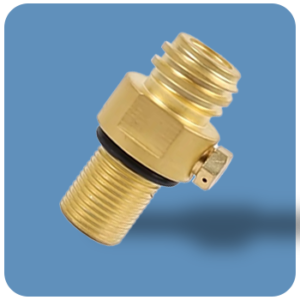
- Valve thread: 1/2″-14 NPSM (US standard) or ASA thread for remote line setups
Critical Quality Standards
Paintball cylinders face unique demands that industrial cylinders don’t:
- Impact resistance: Players run, dive, and occasionally drop cylinders — they must survive field conditions
- Finish durability: Matte or gloss anodized finish that withstands dirt, paint, and repeated handling
- Thread precision: Valves are connected/disconnected frequently — thread wear is a major complaint point
- Weight consistency: Paintball players are weight-sensitive; +5% weight variation gets noticed and returned
The CO2 vs. HPA Shift
An important trend: High-Pressure Air (HPA) tanks are gaining share in tournament paintball. HPA systems use compressed air at 3000-4500 PSI and provide more consistent velocity in cold weather. However, CO2 retains significant advantages:
| Factor | CO2 | HPA |
|---|---|---|
| Cylinder cost | $20-40 | $50-200 |
| Fill cost | $3-5 per fill | $1-3 per fill |
| Shots per fill (20oz/48ci) | 1000-1200 | 500-800 |
| Fill availability | Widely available | Specialized equipment needed |
| Cold weather performance | Velocity drops | Consistent |
| Best for | Recreational, scenario, entry-level | Tournament, speedball |
Strategic takeaway: CO2 dominates the recreational and entry-level segments (70%+ of the market by unit volume). HPA is growing in tournaments but represents a different product category. There’s plenty of room in CO2 for the foreseeable future.
Buyer Segments and Channels
1. Paintball Fields and Pro-Shops
- Buying pattern: Bulk orders (50-200 units), quarterly restock
- What matters: Consistency, quick delivery, replacement warranty
- Typical markup: 40-60% from wholesale
- Pain point: Cylinders getting lost/stolen by rental players; always need replacements
2. Online Retailers (Amazon/eBay/Independent)
- Buying pattern: Regular small-medium orders (20-100 units)
- What matters: Listing-ready packaging, product photos, competitive pricing
- Typical margin: 25-35% after platform fees
- Pain point: Return rate — paintball gear gets high returns from “it didn’t fit” or “changed my mind”
3. Distributors / Wholesalers
- Buying pattern: Large container orders (500-2000+ units)
- What matters: Price, certifications, consistent supply, private labeling
- Typical margin: 20-30% distribute to retailers
- Pain point: Lead time uncertainty — need 45-60 day visibility
4. Private Label / Brand Owners
- Buying pattern: OEM/ODM orders, custom branding, specific configurations
- What matters: Custom color anodizing, logo printing, custom packaging
- MOQ: Typically 500-1000 units for custom runs
- Pain point: Color consistency batch-to-batch with anodizing
Competitive Landscape
Major Brands (Competition for Your Buyers, Not Necessarily Competitors)
- Tippmann (US): Market leader in entry-level, massive brand recognition
- Empire (US): Strong mid-range brand, active in tournament sponsorship
- Ninja Paintball (US): Premium brand, known for regulators and HPA
- First Strike (US): Growing brand, innovative product design
Key insight: These brands don’t manufacture their own cylinders — they source from factories (primarily in China and Taiwan). Their brand premium is 30-50% over factory-direct equivalents. This creates an opportunity for new brands and direct-to-consumer sellers.
Manufacturing Competition (Actual Factory Competitors)
Paintball-grade cylinder manufacturing is concentrated in a relatively small number of factories in China. The barriers to entry from a manufacturing perspective include:
- Paintball-specific tooling and sizing requirements
- Threading precision for 1/2″ NPSM valve interface
- Consistent anodizing quality across colors
- DOT/CE certification as a minimum baseline
Pricing Strategy
Factory-Direct Wholesale Pricing (FOB China)
| Cylinder Size | FOB Price (500+ units) | FOB Price (2000+ units) | FOB Price (5000+ units) |
|---|---|---|---|
| 9 oz | $7.50-9.00 | $6.50-8.00 | $5.50-7.00 |
| 12 oz | $8.50-10.00 | $7.50-9.00 | $6.50-8.00 |
| 20 oz | $10.00-12.50 | $9.00-11.00 | $8.00-10.00 |
| 24 oz | $11.00-13.50 | $10.00-12.00 | $9.00-11.00 |
Prices include standard anodizing (black or silver), basic valve, and individual poly bag packaging. Custom colors +$1.00-2.00/unit, custom logo printing +$0.50-1.00/unit.
Retail Price Benchmarks (US Market)
- 20 oz basic aluminum CO2 tank: $24.99-$34.99 (Amazon average: $29.99)
- 20 oz with advanced valve/regulator: $39.99-$54.99
- 12 oz compact: $19.99-$27.99
- 24 oz extended play: $29.99-$39.99
Entering the Paintball Niche: 3 Strategies
Strategy 1: Private Label Amazon Seller
Best for: Experienced Amazon sellers looking for a new niche
- Order 200-500 units with custom packaging and your brand name
- List on Amazon with professional photos and A+ Content
- Target margin: 25-35% net after all fees
- Key success factor: Reviews — incentivize early reviews through product inserts and follow-up
- Risk: Moderate — paintball category is competitive but not saturated
Strategy 2: Distributor to Paintball Fields
Best for: Businesses with field or sports connections
- Order 500-1000 units (mixed sizes)
- Approach local and regional paintball fields directly
- Sell at 40-60% margin with volume discounts
- Key success factor: Relationships and reliability — fields need consistent supply
- Risk: Lower — B2B, recurring orders, relationship-based
Strategy 3: Paintball Brand Launch
Best for: Entrepreneurs wanting to build a brand in the paintball space
- Start with OEM cylinders from a quality manufacturer (VS Cylinder)
- Develop your brand identity, packaging, and online presence
- Sell through your own website + Amazon + paintball forums
- Sponsor local teams and events for grassroots marketing
- Key success factor: Community engagement — paintball is a tight-knit community
- Risk: Higher — brand building takes time and investment
Common Pitfalls for Paintball Cylinder Sellers
- Underestimating return rates: Paintball shoppers return at 8-12% vs. 3-5% for general categories. Budget for it.
- Ignoring HPA trend: While CO2 dominates now, having an HPA product line as backup is smart diversification
- Poor valve quality: The valve is the #1 complaint point — cheap valves leak, stick, or fail under pressure
- Wrong certification: Selling DOT cylinders in the EU? They’ll get seized. Know your market’s certification requirements.
- Seasonal inventory mismanagement: 50% of paintball sales happen March-August. Don’t get caught with excess in December.
VS Cylinder: Your Paintball CO2 Cylinder Manufacturing Partner
VS Cylinder manufactures high-quality paintball CO2 cylinders for brands, distributors, and Amazon sellers worldwide. Our paintball product line features:
- All standard sizes: 9oz, 12oz, 16oz, 20oz, 24oz
- 6061-T6 aluminum construction with DOT and CE certification
- Custom anodizing: black, silver, red, blue, green, gold, and custom colors
- Precision 1/2″ NPSM threads with quality valve assemblies
- Retail-ready packaging options including blister packs and branded boxes
- Flexible MOQ starting from 200 units for standard configurations
- OEM/ODM with custom branding, color, and packaging
Ready to enter the paintball CO2 cylinder market? Contact VS Cylinder for product samples, wholesale pricing, and a customized supply solution for your paintball business.