

CO2 Cylinder Export Packaging: Safe Shipping for Pressurized Gas Cylinders
Shipping pressurized CO2 cylinders internationally is not as simple as putting them in a cardboard box and handing them to a freight forwarder. Gas cylinders are classified as dangerous goods, and improper packaging can lead to customs seizures, shipping rejections, safety incidents, and lost customers. This guide covers everything CO2 cylinder exporters need to know about export-grade packaging that meets international dangerous goods regulations.
Understanding Dangerous Goods Classification
CO2 cylinders are classified as Class 2.2 (non-flammable, non-toxic compressed gas) under the UN Recommendations on the Transport of Dangerous Goods. This classification affects every aspect of your packaging:
- UN number: CO2 gas cylinders typically fall under UN1013 (Carbon Dioxide) or UN3364 (Gas cylinders with their valves not incorporated into a vehicle)
- Proper shipping name: “Carbon Dioxide, compressed” must appear on shipping documents
- Packing instruction: IATA Packing Instruction 200 for air freight; IMDG Code for ocean freight
- Marking requirements: UN hazard class label (green diamond with 2.2), UN number, orientation arrows
Failure to properly declare and package compressed gas cylinders can result in $25,000-$500,000 fines under IATA Dangerous Goods Regulations, and criminal prosecution for willful violations.
Ocean Freight Packaging (IMDG Code)
Ocean freight is the most common and cost-effective method for shipping CO2 cylinders in bulk. Under the IMDG (International Maritime Dangerous Goods) Code:
Inner Packaging
- Individual cylinder protection: Each cylinder must be individually wrapped with bubble wrap (minimum 5mm thickness) or foam sleeves to prevent surface scratches and metal-to-metal contact
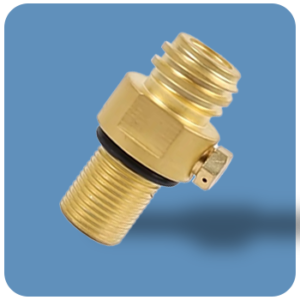
- Valve protection: Valves must be covered with plastic valve caps or guards to prevent damage during handling. A damaged valve is the most common cause of rejection by freight forwarders
- Thread protection: Threaded connections should have plastic thread protectors installed
Outer Packaging
- Corrugated carton: Double-wall (5-ply) or triple-wall (7-ply) corrugated boxes rated for minimum 25kg per carton. For 425g cylinders, use 200x150x200mm individual cartons; for 2L/5L cylinders, use partitioned cartons
- Partition systems: For multi-cylinder cartons, use corrugated dividers or honeycomb cardboard partitions to prevent cylinder collision during transit
- Palletization: Cartons should be stacked on heat-treated wooden pallets (ISPM-15 compliant) and secured with stretch film and strapping. Maximum stack height: 1.8 meters
Labeling
- Class 2.2 hazard label (green diamond, minimum 100mm x 100mm) on two opposite sides of each carton
- UN number marking (e.g., “UN1013”) adjacent to hazard label
- Orientation arrows indicating “This Side Up” on at least two sides
- Proper shipping name on shipping marks
- Pallet placards: 250mm x 250mm hazard placards on all four sides of the pallet
Air Freight Packaging (IATA DGR)
Air freight is faster but significantly more restrictive for compressed gas cylinders. Not all CO2 cylinder types are permitted on passenger aircraft:
- Passenger aircraft: UN1013 is forbidden on passenger aircraft. Only cargo aircraft may transport CO2 cylinders by air
- Cargo aircraft only: Permitted with proper packaging and documentation under IATA Packing Instruction 200
- Maximum cylinder size: Most airlines limit individual cylinder water capacity to 5L for air freight
- Quantity limits: Package quantity must not exceed the “Q value” calculation (sum of quantities/limit per package)
For air freight, all ocean freight packaging requirements apply, plus:
- UN-specification packaging: Packaging must meet UN performance standards (drop test, stacking test, pressure test). Look for the UN packaging code printed on the carton
- Shipper’s Declaration for Dangerous Goods: A formal DGD form must accompany every air shipment, signed by a certified shipper
- Air Waybill: Must include the notation “Dangerous Goods as per attached Shipper’s Declaration”
425g Mini Cylinder Specific Packaging
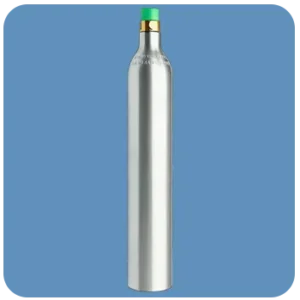
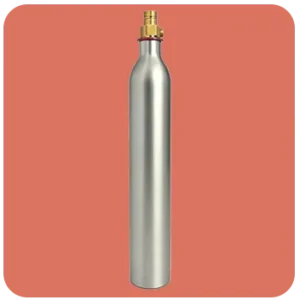
425g CO2 cylinders (the most popular export product for soda machine markets) require special consideration due to their small size:
- Master carton packing: Typically 50-100 pieces per master carton, with individual cylinder dividers
- Net weight considerations: 50 x 425g cylinders = 21.25kg net weight + packaging. Keep total gross weight under 30kg per carton for manual handling
- Retail-ready packaging: If selling B2C through Amazon, individual cylinder retail boxes should be tamper-evident and include safety instructions in the target market language
- Temperature protection: Avoid extreme temperature exposure. CO2 pressure increases significantly above 50 degrees Celsius. Do not ship in containers exposed to direct sun without thermal protection
2L and 5L Cylinder Packaging
Larger cylinders require different packaging approaches:
- Individual carton: Each 2L or 5L cylinder ships in an individual corrugated carton with foam end caps (top and bottom) and a central foam sleeve
- Pallet configuration: 2L cylinders — 120 pieces per pallet (10×12 arrangement); 5L cylinders — 48 pieces per pallet (6×8 arrangement)
- Edge protection: Use corner boards on pallets to prevent strapping damage to cartons
- Shrink wrap: Minimum 5 layers of stretch film, applied with top-sheet to waterproof the pallet
Documentation Required for Export Packaging
Proper documentation is as important as the physical packaging itself:
- Dangerous Goods Declaration (DGD): Required for all modes of transport. Must be completed by a certified DG shipper
- MSDS / SDS (Material Safety Data Sheet): Updated SDS for CO2 gas, in English and destination country language
- UN test certificate: Packaging manufacturer’s test report confirming the packaging meets UN performance standards
- Packing list: Detailed packing list with carton dimensions, weights, and UN numbers
- Commercial invoice: Must reference the HS code and proper shipping name
- Certificate of origin: Required for preferential tariff treatment in many markets
Common Packaging Mistakes That Cause Rejections
Learn from the mistakes that other exporters have made:
- Missing valve protectors: The #1 cause of rejection. Every cylinder must have its valve protected
- Under-rated cartons: Using single-wall corrugated for heavy cylinders. The carton collapses during stacking
- Incorrect hazard labeling: Using flammable gas (red) labels instead of non-flammable (green). This causes immediate seizure
- No ISPM-15 treatment: Wooden pallets without heat treatment certification are rejected at customs in most countries
- Inadequate strapping: Pallets that break open during loading/unloading. Use both horizontal and vertical strapping
- Mixed classification: Shipping CO2 cylinders with other gas types in the same container without segregation as required by IMDG
Cost Optimization Without Compromising Safety
Packaging can account for 5-15% of total CO2 cylinder export cost. Optimize without cutting corners:
- Standardize carton sizes: Use standard carton dimensions that maximize container space utilization. Custom sizes waste space and increase shipping cost per unit
- Bulk packaging for B2B: For distributor orders, use bulk pallet packaging instead of individual retail packaging. Save $0.30-$0.50 per cylinder
- Reusable packaging: For regular OEM shipments to the same buyer, consider reusable steel transport frames instead of disposable cartons
- Negotiate with packaging suppliers: Volume orders of corrugated cartons and foam inserts can reduce packaging cost by 15-25%
- Container load calculation: Calculate exact carton-to-container fit to avoid shipping air. A 20ft container typically holds 8-10 pallets; a 40ft HQ holds 20-22 pallets
Key Takeaways
- CO2 cylinders are Class 2.2 dangerous goods (UN1013) requiring certified packaging for all international transport
- Ocean freight follows IMDG Code; air freight follows IATA DGR (cargo aircraft only for CO2)
- Valve protection is the single most important packaging element — never ship without valve caps
- Use double-wall corrugated cartons with partition systems and ISPM-15 pallets
- All shipments require a Dangerous Goods Declaration from a certified shipper
- Standardize packaging to optimize container space and reduce per-unit cost
- Common rejections stem from missing valve protectors, under-rated cartons, and incorrect labels
Proper packaging is not an expense — it is an insurance policy against rejected shipments, damaged goods, and regulatory fines. Invest in certified packaging materials, train your warehouse team on dangerous goods handling, and document every shipment thoroughly. Your packaging quality is the first thing buyers see when they open your shipment; make it reflect your factory’s commitment to quality.