
Private labeling is one of the most powerful strategies for B2B sellers looking to build a sustainable, defensible business in the CO2 cylinder market. Instead of selling generic, commoditized products, private labeling lets you create your own brand with custom packaging, logos, and specifications. This guide walks through everything you need to know about building a private label CO2 cylinder brand through OEM manufacturing.
Why Private Label CO2 Cylinders?
The CO2 cylinder market is competitive, and differentiation is essential. Selling unbranded or factory-branded cylinders means competing primarily on price, which erodes margins over time. Private labeling offers several strategic advantages:
- Brand equity: Your brand name and logo on every cylinder builds recognition and customer loyalty over time. Customers who trust your brand will return for repeat purchases and recommend you to others.
- Premium pricing: Branded products command higher prices than generic alternatives. Studies show that consumers perceive branded products as higher quality, even when the underlying product is identical.
- Platform protection: On marketplaces like Amazon, having your own brand registration protects your listings from hijackers and counterfeiters. Brand Registry gives you tools to enforce your intellectual property.
- Customer retention: When customers buy your branded cylinder, they know where to get replacements. This creates a natural recurring revenue stream for consumable products like CO2 cylinders.
- B2B relationship control: With your own brand, you control the customer relationship rather than being dependent on a factory that could change terms or discontinue products.
OEM vs ODM: Understanding Your Manufacturing Options
Before diving into private labeling, it is important to understand the two main manufacturing models:
OEM (Original Equipment Manufacturer)
In the OEM model, you provide detailed specifications, designs, and branding requirements, and the factory manufactures the product to your exact specifications. You own the design and brand. This model gives you maximum control over the product but requires more upfront work in design and specification.
ODM (Original Design Manufacturer)
In the ODM model, the factory provides an existing product design that you can customize with your branding. The factory owns the underlying design, and you apply your logo, colors, and packaging. This model is faster to market but offers less customization flexibility.
For CO2 cylinders, the ODM model is often sufficient since the underlying product (a pressurized aluminum cylinder) is standardized. Customization typically focuses on branding elements rather than structural design changes. However, if you need unique specifications such as custom thread types, special coatings, or non-standard sizes, the OEM model may be necessary.
Branding Customization Options for CO2 Cylinders
CO2 cylinders offer several surfaces and elements that can be customized for branding:
1. Cylinder Body Printing and Coating
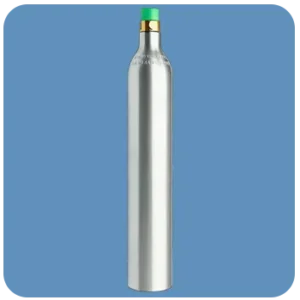
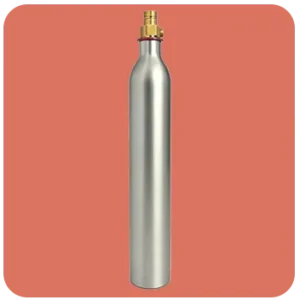
The cylinder body is the most visible surface and offers the largest branding area. Customization options include:
- Silk screen printing: Direct printing on the cylinder body with your logo, brand name, and product information. This is the most common and cost-effective branding method.
- Powder coating: Applying a colored powder coat in your brand colors. This provides both branding and an additional protective layer.
- Anodizing (aluminum only): An electrochemical process that colors the aluminum surface. Available in various colors including gold, blue, red, and black. Anodizing is more durable than paint and provides a premium appearance.
- Full-wrap labels: Vinyl or polyester wraps that cover the entire cylinder body. These allow for complex designs and photographic imagery but are less durable than direct printing.
2. Valve and Cap Customization
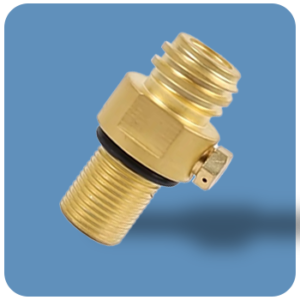
The valve and protective cap can also be branded:
- Custom colored valve handles in your brand colors
- Logo laser-etched on the valve body
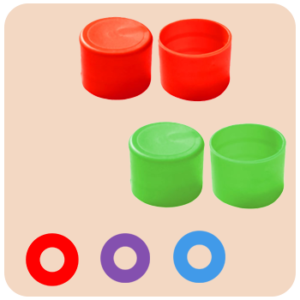
- Custom-molded protective caps with your logo
3. Packaging Customization
Packaging is often the first thing customers see. Options include:
- Custom-printed individual boxes with your brand design
- Multi-packs with branded outer packaging
- Custom inserts and padding branded with your logo
- Instruction sheets and warranty cards with your branding
4. Cylinder Markings and Engravings
Regulatory markings on the cylinder shoulder can include your brand name and model number alongside the required certification marks. This ensures that even without visible branding, the cylinder is identifiable as yours.
MOQ and Cost Considerations
Private labeling requires minimum order quantities (MOQs) that vary by customization type:
| Customization Type | Typical MOQ | Setup Cost | Unit Cost Increase |
|---|---|---|---|
| Logo printing only | 500 pcs | $200-500 | $0.50-1.00/pc |
| Powder coating + printing | 1,000 pcs | $500-1,000 | $1.00-2.00/pc |
| Anodizing + printing | 2,000 pcs | $1,000-2,000 | $2.00-4.00/pc |
| Custom packaging | 500 pcs | $300-800 | $0.80-1.50/pc |
| Full custom (all elements) | 3,000 pcs | $2,000-4,000 | $3.00-6.00/pc |
These are approximate ranges. Actual costs depend on the factory, order volume, and complexity of the design. Higher volumes generally reduce per-unit costs significantly.
The Private Label Process: Step by Step
Step 1: Define Your Brand Identity
Before approaching manufacturers, develop your brand identity including brand name, logo, color scheme, and brand positioning. Your brand should communicate quality and reliability for pressure vessels. Consider hiring a professional designer to create your visual identity.
Step 2: Research and Select a Manufacturer
Choose a manufacturer with proven experience in private label CO2 cylinders. Key criteria include manufacturing certifications (ISO 9001, DOT, TPED), existing private label clients, production capacity, and willingness to accommodate customization requests. Request samples of their private label work for other clients.
Step 3: Specify Your Customization Requirements
Create a detailed specification document that includes:
- Logo files in vector format (AI, EPS, or SVG)
- Pantone or CMYK color codes for all branded elements
- Exact placement and size of logos and text on the cylinder
- Packaging design files and material specifications
- Any custom valve or cap requirements
Step 4: Request and Evaluate Samples
Before placing a full production order, request pre-production samples. These samples should include all customization elements. Evaluate the samples for print quality, color accuracy, coating durability, and overall appearance. Do not proceed to production until samples meet your expectations.
Step 5: Place Production Order
Once samples are approved, place your production order. Specify the delivery timeline, quality control requirements, and inspection protocols. Consider hiring a third-party inspection service to verify quality before shipment.
Step 6: Register Your Brand and Trademarks
Before products arrive, register your brand name as a trademark in your target markets. On Amazon, enroll in Brand Registry to gain access to A+ Content, brand protection tools, and enhanced listing features. Register your trademark through the Madrid system for multi-country protection.
Step 7: Launch and Market Your Brand
With products in hand, launch your brand across your chosen sales channels. Develop marketing materials that highlight your brand’s unique value proposition. For CO2 cylinders, emphasize quality, safety, and reliability alongside your branding.
Intellectual Property Protection for Private Label Brands
Protecting your brand is critical when private labeling. Key steps include:
- Trademark registration: Register your brand name and logo in every market where you sell. Use the Madrid Protocol for efficient multi-country registration.
- Amazon Brand Registry: Enroll your brand on Amazon to access protective tools and prevent listing hijacking.
- Design patents: If your cylinder design includes unique ornamental features, consider design patent protection.
- Non-disclosure agreements: Have your manufacturer sign an NDA to prevent them from producing identical products for competitors.
- Exclusivity agreements: Negotiate exclusivity clauses that prevent the manufacturer from selling your exact design to other clients.
Go-to-Market Strategies for Private Label CO2 Cylinders
Amazon Private Label
Amazon is the primary channel for private label CO2 cylinders. Use FBA for fulfillment, A+ Content for enhanced listings, and Amazon PPC for traffic. Register your brand to unlock all brand-building features. Focus on building reviews through the Amazon Vine program and excellent customer service.
DTC Website
Build a Shopify or WooCommerce store to sell directly to consumers. This gives you full control over the customer experience and higher margins, but requires significant marketing investment. Use Google Ads and social media to drive traffic.
Wholesale to Retailers
Sell your branded cylinders to local retailers, kitchen supply stores, and specialty beverage shops. This requires a sales team or distributor network but can achieve high volume in specific regions.
Marketplace Expansion
Once established on Amazon, expand to other marketplaces such as Walmart Marketplace, eBay, and international Amazon marketplaces. Each marketplace has different requirements, so research carefully before expanding.
Common Private Label Pitfalls
- Underestimating MOQ costs: Private labeling requires upfront investment in tooling, samples, and minimum order quantities. Budget for these costs before starting.
- Choosing the cheapest manufacturer: Quality matters for pressure vessels. A manufacturer that cuts corners on materials or quality control will damage your brand reputation.
- Neglecting trademark protection: Failing to register your trademark before launch leaves your brand vulnerable to copycats.
- Poor packaging design: CO2 cylinders are heavy and require robust packaging. Inadequate packaging leads to shipping damage and returns.
- Ignoring compliance requirements: Even with your own brand, cylinders must meet all regulatory standards for your target market. Do not assume the manufacturer handles compliance automatically.
Conclusion
Private labeling CO2 cylinders through OEM manufacturing is a powerful strategy for building a sustainable B2B business. By creating your own brand, you gain pricing power, customer loyalty, and protection against competition. The key is choosing the right manufacturer, investing in quality branding, protecting your intellectual property, and executing a strategic go-to-market plan.
VS Cylinder offers comprehensive OEM/ODM services for private label CO2 cylinders, including custom printing, anodizing, packaging, and valve customization. Our manufacturing facility meets international quality standards, and we support brands throughout the entire process from design to delivery. Contact us to discuss your private label project and receive a detailed quotation.