
Expanding your CO2 cylinder business into international markets is one of the most effective ways to scale revenue — but it’s also a regulatory minefield. From DOT in the United States to TPED in Europe, each target market has its own certification requirements, labeling standards, and import procedures. This comprehensive roadmap breaks down everything you need to know about exporting aluminum CO2 cylinders globally.
Why Export CO2 Cylinders? Market Opportunity Overview
The global market for compressed gas cylinders is projected to grow at a CAGR of 5.8% through 2030, driven by surging demand in three key sectors:
- Beverage Carbonation — Home soda water machines have become a mainstream appliance in North America, Europe, and Asia-Pacific markets.
- Medical & Healthcare — Post-pandemic demand for portable oxygen cylinders remains elevated worldwide.
- Tactical Sports — Paintball and airsoft continue growing, particularly in emerging Southeast Asian and Latin American markets.
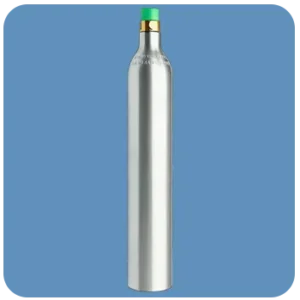
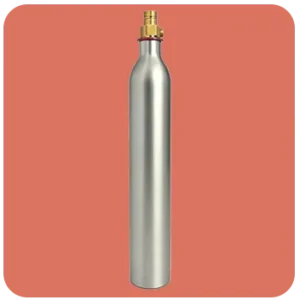
For manufacturers like VS Cylinder, which produces high-quality 425g aluminum CO2 cylinders with full OEM/ODM capabilities, understanding export compliance isn’t optional — it’s a competitive advantage that separates serious players from opportunistic sellers.
Regional Certification Requirements by Market
North American Market (USA & Canada)
The U.S. Department of Transportation (DOT) sets the standard for all pressure vessels transported within or into the United States:
- DOT-3AL Specification — Aluminum cylinders must meet 49 CFR 178.37 requirements, including hydrostatic testing at 5/3 of service pressure.
- DOT Special Permit — Required for non-standard cylinder configurations; typically takes 4-8 months for approval.
- FCC Marking — If your cylinder incorporates electronic components (smart valves, IoT sensors), FCC Part 15 compliance is mandatory.
- Canadian TC Approval — Transport Canada has its own approval process (TC-3ALM), though many DOT-certified products receive mutual recognition.
European Union Market (EU27 + UK)
Europe presents a more complex regulatory landscape due to harmonized EU directives plus post-Brexit UK-specific rules:
- TPED (2010/35/EU) — Transportable Pressure Equipment Directive is the cornerstone regulation. All CO2 cylinders sold in the EU must carry CE marking under TPED with an accredited Notified Body (NoBo).
- PED Compliance — If cylinders are classified as pressure equipment above PS times V thresholds, the Pressure Equipment Directive (2014/68/EU) also applies alongside TPED.
- UKCA Marking — Since Brexit, the UK requires UK Conformity Assessed marking instead of CE for Great Britain. Northern Ireland still accepts CE marking under the Windsor Framework.
- EPR Registration — German VerpackG (Packaging Act), French EPR, and similar extended producer responsibility schemes apply to packaging materials used with cylinder shipments.
Asia-Pacific Markets
- Japan — PSE & KHK Standards: Electrical Safety Act (PSE) certification applies if any component is electrical. JIS B 8246 governs gas cylinder specifications. KHK (High Pressure Gas Safety Act) registration is required for importers.
- Australia/New Zealand — AS/NZS Standards: AS2030.1 for gas cylinders, plus ACCC safety standards. Importers must register on the Australian Gas Association database.
- Southeast Asia — Emerging Frameworks: Thailand’s TISI, Indonesia’s SNI, and Malaysia’s ST are rapidly developing standards. Many countries currently accept international certifications (DOT/TPED) as interim measures.
Logistics: Shipping CO2 Cylinders Internationally
Hazardous Goods Classification
Empty CO2 cylinders are classified as UN 2037 (Gas cylinders, empty) under IATA DGR and IMDG Code. Key shipping considerations:
- Air Freight — Empty aluminum CO2 cylinders can ship as cargo aircraft only (CAO) or passenger aircraft with specific packaging. Valve protection caps are non-negotiable.
- Ocean Freight — Most economical for bulk orders. FCL (Full Container Load) of 20GP holds approximately 13,600 units of standard 425g cylinders. HQ40 holds approximately 28,800 units.
- Rail (China-Europe Railway Express) — Emerging option offering 15-18 day transit time between China and Europe, faster than ocean at lower cost than air for mid-volume shipments.
Packaging Requirements for International Shipment
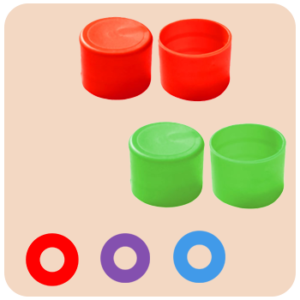
Proper packaging is not just about protecting product — it’s a regulatory requirement. VS Cylinder’s export packaging system includes individual cylinder wrapping with protective foam sleeve, color-coded valve dust cap (red/green), durable carton boxes (320mm x 260mm x 375mm for standard 20-piece packs), pallet loading with stretch wrap and desiccant packets, and customizable OEM labeling per buyer requirements.
Import Duty & Tax Considerations
Understanding HS code classification is critical for accurate duty calculation. HS Code 7311.00 covers portable gas containers of iron or steel (typically 4-7% duty). HS Code 7612.90 covers aluminum containers (often 2-5% duty, varies by country). HS Code 8419.90 covers parts of refrigerating machinery if classified as soda machine accessories.
VAT/GST Impact: European VAT rates range from 17% (Luxembourg) to 27% (Hungary). IOSS (Import One-Stop Shop) simplifies VAT collection for e-commerce sales under EUR 150. In the US, state-level sales tax nexus rules determine tax obligations based on economic presence thresholds.
Documentation Checklist for Every Shipment
| Document | Purpose | Required By |
|---|---|---|
| Certificate of Origin | Verify manufacturing origin | Customs (all markets) |
| Packing List | Itemize contents, weights, dimensions | Freight forwarder, customs |
| Commercial Invoice | Declare value for duty calculation | Customs, banks |
| Test Certificate / Material Report | Prove material compliance | Regulatory bodies |
| DOT/TPED Certificate | Market-specific approval proof | Target market authority |
| MSDS/SDS | Safety data for residual gas handling | Transport carriers |
| Insurance Certificate | Cargo insurance coverage | Buyer/bank requirement |
Key Takeaways for Successful CO2 Cylinder Exports
- Certify first, sell later. Don’t approach a new market without the required certifications already in place. A single compliance failure can result in port detention, fines, and permanent reputational damage.
- Partner with experienced freight forwarders. Hazardous goods logistics require specialists who understand both DG regulations and your specific product category.
- Build compliance into your pricing model. Certification costs ($3,000-$15,000 per market), testing fees, and documentation overhead should be factored into your FOB/CFR quotes from day one.
- Leverage free trade agreements. RCEP (Asia-Pacific), CPTPP, and bilateral FTAs can significantly reduce or eliminate duties between member countries.
Ready to source certified CO2 cylinders for your export business? VS Cylinder offers complete export-ready solutions including DOT/TPED dual-certified 425g aluminum cylinders, custom OEM branding, and global logistics support. Contact our team today for wholesale pricing and certification documentation.