
The Private Label CO2 Cylinder Gold Rush
Walk into any Target, Walmart, or Bed Bath & Beyond in the United States, and you’ll find private label soda makers on the shelf. Behind every “Amazon’s Choice” CO2 cylinder, there’s a factory in China that manufactured it—and a brand owner in the US or Europe capturing 3-5x the margin. The private label CO2 cylinder market is exploding, driven by three unstoppable trends: the home carbonation boom, the shift from disposable to refillable cylinders, and Amazon’s democratization of brand-building.
This is your complete guide to launching a private label CO2 cylinder brand—from supplier selection to product differentiation to Amazon marketplace strategy. Whether you’re a distributor looking to go direct-to-consumer or a factory owner considering your own brand, this playbook maps the entire journey.
Part 1: Private Label vs White Label vs OEM — Know Your Model
| Model | Product | Branding | MOQ | Lead Time | Margin | Best For |
|---|---|---|---|---|---|---|
| White Label | Pre-made, generic design | Your logo only | 100-500 units | 2-4 weeks | Lowest | Testing the market, small budgets |
| Private Label | Existing template with modifications | Your brand + custom colors/design | 500-2,000 units | 4-8 weeks | Medium | Established Amazon/eCommerce sellers |
| OEM (Full Custom) | New mold, custom specs | Full brand identity, custom packaging | 3,000-10,000+ units | 8-16 weeks | Highest | Large brands, chain retailers |
Recommendation for first-time private labelers: Start with white label (100-200 units) to validate demand. If the product sells, graduate to private label with modifications based on customer feedback. Full OEM only after you have proven unit economics and brand traction.
Part 2: Supplier Selection — The 10-Point Factory Audit Framework
2.1 Must-Have Certifications
Your supplier must have these before you proceed:
| Certification | Requirement | Why It Matters |
|---|---|---|
| ISO 9001:2015 | Mandatory | Quality management system. Without this, walk away. |
| DOT 3AL (US) | Mandatory for US market | Cylinder specification approval. Customs rejects cylinders without it. |
| CE + TPED (EU) | Mandatory for EU market | European pressure equipment directive compliance. |
| BSCI / SEDEX | Strongly preferred | Social compliance audit. Required by major retailers (Walmart, Target). |
| ISO 14001 | Preferred | Environmental management. EU buyers especially value this. |
| FDA (food-grade) | Required for food/beverage application | Ensures cylinder interior is food-safe. |
2.2 Factory Audit Checklist
If possible, visit the factory. If not, hire a third-party inspection company (SGS, Bureau Veritas, TUV). Key audit points:
- Raw material traceability: Can they trace aluminum alloy from mill certificate to finished cylinder?
- CNC machining capability: In-house or outsourced? In-house is strongly preferred for quality control.
- Pressure testing lab: Do they have automated hydrostatic testing equipment? Manual testing = higher defect rate.
- Leak detection: Helium mass spectrometer testing is the gold standard. Water bath testing is minimum acceptable.
- Surface treatment: Anodizing, powder coating, or painting—which processes are in-house?
- Quality sample retention: Do they retain samples from each production batch for traceability?
- Export experience: How many containers do they ship monthly? Which countries?
- English capability: Can their sales/QC team communicate effectively in English?
- Payment terms: Standard is 30% deposit, 70% before shipment. Negotiate 30/70 against B/L copy for repeat orders.
- Client references: Ask for contact info of current private label clients (expect them to provide references after NDA).
Part 3: Product Differentiation — How to Stand Out
3.1 The 5 Dimensions of CO2 Cylinder Differentiation
When you’re private labeling a commodity product, differentiation is everything. Here’s where to focus:
1. Visual Identity
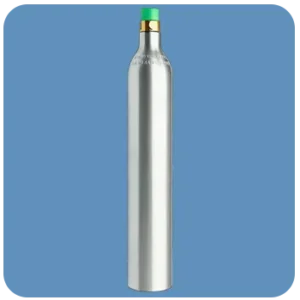
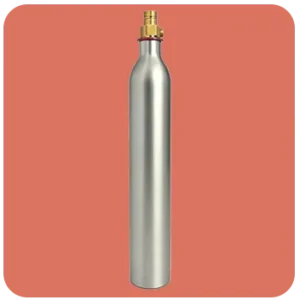
- Custom color: Don’t use standard gray/black. Metallic red, brushed aluminum, matte white, copper finish—standing out in the search results is the first battle
- Custom sleeve/label: Full-color shrink sleeve with your brand identity. Waterproof, scratch-resistant material
- Laser engraving: Your logo and safety info laser-etched directly onto the cylinder—premium feel, permanent
2. Packaging Experience
- Retail-ready box: Full-color printed box instead of plain brown cardboard. Include unboxing experience: foam inserts, welcome card, quick-start guide
- In-box content: Include a printed compatibility chart for major soda machine brands, safety instructions card, and a QR code to your brand website
- Sustainability: FSC-certified recyclable packaging. EU consumers especially value this
3. Functional Differentiation
- Weight optimization: Is your 425g cylinder lighter than competitors? Every gram matters—highlight it
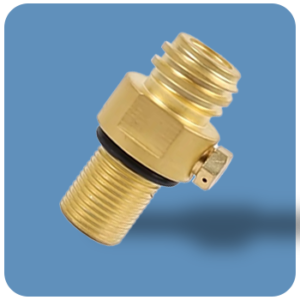
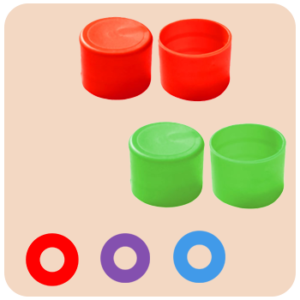
- Thread quality: Precision CNC threading that screws in “like butter.” Include a thread protector cap
- Nozzle/no-drip valve: If you offer a valve that reduces CO2 waste during exchange, that’s a USP
- Fill quality: Guarantee minimum 425g net weight. Under-filled cylinders = terrible reviews
4. Certification Storytelling
- Don’t just list certifications—explain what they mean for the customer: “DOT 3AL certified means this cylinder was tested to 1.5x its working pressure and approved by the US Department of Transportation”
- Include a scan-able QR code linking to the actual certification documents
5. Brand Story
- Share your manufacturing story—photos of the factory, QC process photos on the packaging
- Include a “From Our Factory to Your Home” card that builds trust and connection
3.2 The Compatibility Advantage
The single biggest pain point for CO2 cylinder buyers is compatibility. A 425g cylinder with a CGA-320 thread doesn’t fit a Sodastream machine that requires a proprietary quick-connect. If you can solve this, you have a massive competitive advantage.
Compatibility matrix to include on your packaging and listing:
- Sodastream: Compatible with [specific models]. Adapter [required/not required].
- Drinkmate: Direct fit ✅
- Aarke: CGA-320 compatible ✅
- Philips GoZero: Requires adapter (included ✅ / not included ❌)
- Mysoda: CGA-320 compatible ✅
- Other brands: Check your machine’s valve type against our compatibility chart at [URL]
Part 4: Pricing Strategy — From Factory to Retail
4.1 The Private Label Cost Stack
| Cost Component | Per Unit (USD) | % of Total |
|---|---|---|
| Factory cost (cylinder + valve + sleeve) | $4.50-6.50 | 25-30% |
| Custom packaging (box, insert, manual) | $0.80-1.50 | 5-7% |
| First-mile logistics (factory to port) | $0.30-0.50 | 2-3% |
| Ocean freight (FCL per unit) | $0.80-1.50 | 5-7% |
| US customs duty (HTS 7311.00.0090, ~5.3%) | $0.40-0.70 | 2-3% |
| US inland freight + FBA inbound | $0.50-1.00 | 3-5% |
| Amazon FBA fees (standard oversize) | $6.50-7.80 | 35-40% |
| Amazon referral fee (15%) | $3.75-4.50 | 20-23% |
| Total landed cost (Amazon FBA) | $17.55-24.00 | 100% |
Pricing scenarios:
- Entry price: $29.99 — Margin: 20-33%. Competitive but thin. Good for launch/ranking.
- Mid-tier: $34.99-39.99 — Margin: 35-48%. Sweet spot for branded CO2 cylinders.
- Premium: $44.99-49.99 — Margin: 45-55%. Requires strong differentiation and brand trust.
- 2-Pack strategy: $49.99-54.99 for 2-pack. Higher AOV, lower per-unit FBA fees, better unit economics.
Part 5: Amazon Launch Strategy for Private Label CO2 Cylinders
5.1 Pre-Launch Checklist
- Brand Registry approved ✅
- Trademark registered (USPTO) ✅
- FBA dangerous goods (DG) approval obtained ✅
- Product liability insurance ($1M+ coverage) ✅
- Listing fully built: title, bullets, A+ Content, 7+ images, video ✅
- Initial inventory: 300-500 units at FBA ✅
- Vine enrollment active ✅
- PPC campaigns ready (auto + broad + phrase) ✅
5.2 Launch Phase PPC Architecture
Week 1-2: Data harvesting mode
- Auto campaigns: 4 match types, $20/day each = $80/day total
- Broad manual: 15 seed keywords, $25/day
- Target: 50-100 clicks/day, generate first orders
Week 3-4: Begin optimization
- Add exact match for converting terms
- Begin negative keyword harvesting
- Start Sponsored Display competitor targeting
5.3 Review Velocity Strategy
CO2 cylinders are a considered purchase. Shoppers read reviews carefully. Your review strategy:
- Vine program: Enroll immediately. Expect 3-8 reviews within 30 days
- Request a Review button: Use for ALL orders. Amazon-compliant and free
- Product insert card: Include a card thanking the customer, with QR code to product support page (do NOT explicitly ask for reviews—Amazon prohibits this)
- Target: 30+ reviews by day 90. 100+ by month 6
Part 6: Scaling Beyond Amazon
6.1 Multi-Channel Strategy
Once you prove the model on Amazon, expand to:
- Shopify DTC store: 0% marketplace commission, full customer data ownership. Higher margin but requires driving your own traffic
- Walmart Marketplace: Growing fast, less competition than Amazon. Requires Walmart-specific operational setup
- eBay: Strong in used/refurb categories, but new CO2 cylinders also sell. Lower fees than Amazon
- B2B channels: Faire, Alibaba.com (sell your own brand, not as a generic supplier), ThomasNet
- Retail wholesale: Approach regional distributors, specialty kitchen stores, paintball shops
6.2 The Subscription Model
CO2 cylinders are consumable—users need replacements every 1-3 months. Build a Subscribe & Save funnel:
- Amazon Subscribe & Save: Offer 5-15% discount for subscription. Recurring revenue = valuation multiplier
- DTC subscription: On your Shopify store, offer an exchange program: customers return empty cylinders, you ship filled ones. Builds incredible loyalty and recurring revenue
Common Private Label Mistakes
- Underinvesting in photography: CO2 cylinders need professional product photos (white background, lifestyle shots, infographics). Amateur photos kill conversion rates
- Ignoring dangerous goods compliance: CO2 cylinders are regulated. Amazon will suspend your listing if you don’t have proper DG documentation. Work with your supplier to prepare the Dangerous Goods Declaration (DGD) and Safety Data Sheet (SDS) before listing
- No product liability insurance: One cylinder failure = lawsuit. $1M+ product liability insurance is non-negotiable
- Choosing the cheapest supplier: A $1/unit savings that leads to 3% higher return rate from quality issues costs far more than the savings
- No differentiation: White label with just a logo slapped on = competing on price. You’ll be in the $19.99-24.99 race to the bottom
- Insufficient inventory for launch: Stocking out during launch kills all momentum. Order 150% of your 60-day sales forecast
6-Month Private Label Launch Timeline
| Month | Activity | Key Milestone |
|---|---|---|
| 1 | Market research, supplier shortlisting, sample ordering | 3-5 supplier samples received and tested |
| 2 | Supplier selection, design development, trademark filing | PO issued, trademark filed |
| 3 | Production, packaging design, Amazon Brand Registry | Production complete, brand registry approved |
| 4 | Shipping (ocean freight), listing creation, A+ Content | Inventory en route, listing live |
| 5 | FBA inbound, launch PPC, Vine enrollment | Inventory available, first sales |
| 6 | Optimization, scale winners, review velocity | 30+ reviews, profitable ACOS |
Conclusion
Private label CO2 cylinders represent one of the most accessible entry points into the home beverage market. The supply chain is mature, the demand is growing, and the path from factory to FBA is well-documented. But success doesn’t come from simply slapping a logo on a generic cylinder—it comes from genuine product differentiation, rigorous supplier quality control, and systematic Amazon marketplace execution.
The window is open now. As more brands enter the space, differentiation and brand building will become the only moats. Start building yours today.